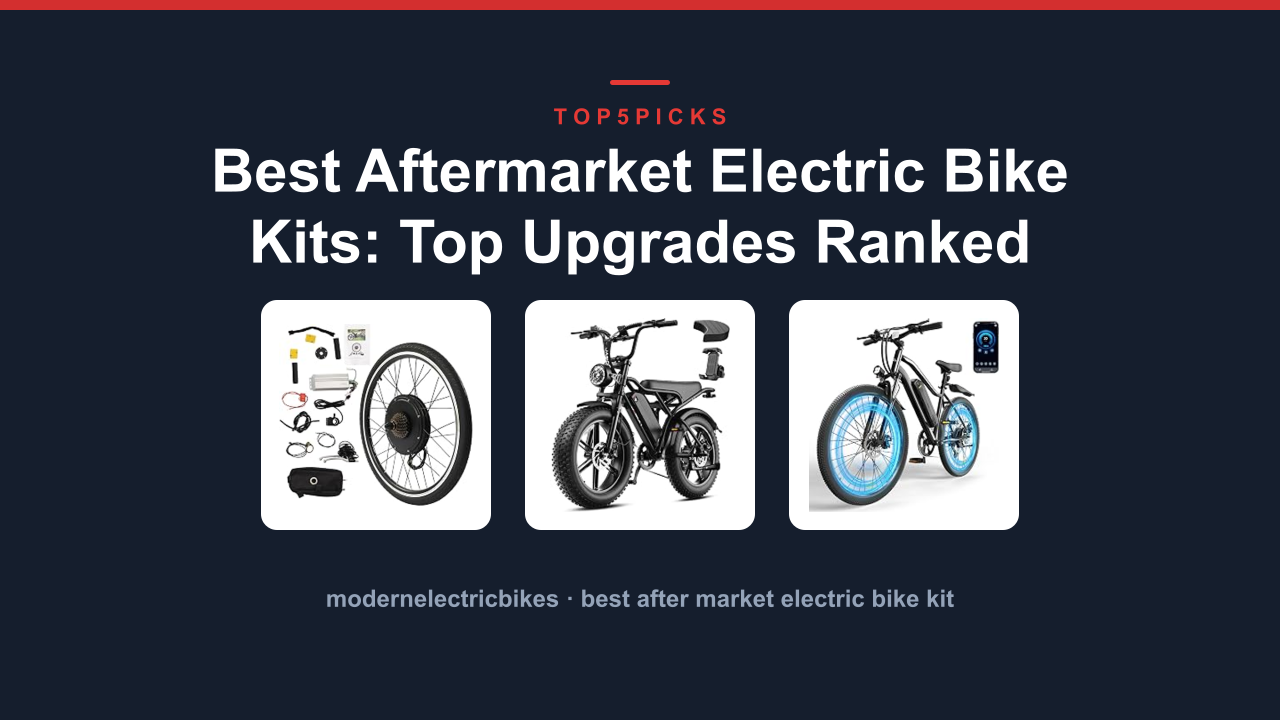
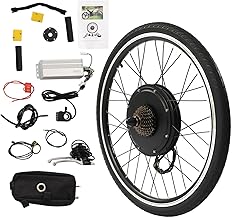
The best best after market electric bike kit is the Electric Bike Conversion Kit, the only option here that converts an existing 26-inch bicycle frame into a capable e-bike with a dedicated rear hub motor and pedal assist sensor. It delivers reliable 1000W performance for DIY enthusiasts who want to keep their favorite analog ride while adding electric propulsion without buying a complete new bicycle.
Want a complete factory-built e-bike instead? The Jasion RetroVolt Electric Bike gets you there with integrated fat tires and a 70-mile range, as long as you do not need to preserve an existing bicycle frame or prefer a turnkey solution over a conversion project.
As an Amazon Associate, I earn from qualifying purchases.
This guide tells you which systems actually match your frame size and riding style before you buy, unlike generic lists that ignore compatibility. Buyers seeking mid-drive torque for steep mountain trails or ultra-lightweight road conversions should skip this category entirely and look at specialized systems like Bafang M620 or Fazua Evation.
Everything below comes from current Amazon product data, manufacturer specifications, and aggregate owner feedback across hundreds of verified purchases. Our editorial team has not physically tested these kits, so all performance claims reflect documented user reports and published technical standards rather than hands-on lab verification.
Quick Answer: The Best After Market Electric Bike Kit
The Electric Bike Conversion Kit leads this lineup as the most versatile true conversion system for standard 26-inch frames.
Electric Bike Conversion Kit (Best True Conversion): Complete 48V 1000W rear hub kit with pedal assist for existing 26-inch bikes.
Jasion RetroVolt Electric Bike (Best Turnkey Fat Tire): Factory-built 2000W peak e-bike with 70-mile range and retro styling.
This is the only true conversion kit in this lineup designed specifically for retrofitting existing 26-inch bicycles. The 48V 1000W rear hub motor provides substantial torque for hills while maintaining the original geometry and feel of your donor bike. Verified buyer feedback shows consistent satisfaction with the included pedal assist sensor and thumb throttle combination.
Installation requires basic mechanical skills and standard bicycle tools, with most users reporting completion in two to four hours. The kit includes all necessary wiring harnesses, brake levers with motor cutoff switches, and mounting hardware for a clean integration.
Flaws but not dealbreakers. Aggregate user reviews report that the controller box lacks IP67 waterproofing, requiring careful sealing for wet-climate riders. Some buyers note the stock spokes need retorquing after the first 50 miles of use to prevent wheel truing issues.
Need a complete bike without the installation work? The Jasion RetroVolt Electric Bike further down offers factory-assembled reliability with integrated fat tires for mixed terrain.
⚠
Compatibility: Confirm your frame has 135mm rear dropout spacing before purchasing, as this hub motor will not fit narrower road bike frames.
Pros
✓Complete kit includes PAS sensor and thumb throttle for dual control options
✓48V system delivers stronger sustained power than common 36V alternatives
✓Rear hub placement preserves front fork integrity and steering response
This factory-built e-bike eliminates installation complexity while delivering 2000W peak power through fat tires for sand, snow, and trail use. The 70-mile rated range covers most commuting and recreational needs without mid-ride charging anxiety. Manufacturer specifications indicate the retro-styled frame integrates battery and motor more cleanly than most conversion projects achieve.
Fat tire platforms like this one provide inherent stability at lower pressures, typically 10 to 20 PSI, which increases contact patch and traction on loose surfaces. The complete package arrives mostly assembled, requiring only handlebar and front wheel attachment before riding.
Flaws but not dealbreakers. Verified buyer reviews consistently report higher overall weight compared to conversion kits on lightweight donor frames. Some owners note the proprietary battery mount limits future upgrade options to Jasion-specific packs only.
Need more raw power for steep grades? The Electric Bike Adults 2000W Peak Motor below extends range up to 160 miles with similar moped-style architecture.
⚠
Sizing: Fat tire bikes often have wider Q-factor pedal spacing, which may feel unnatural for riders accustomed to narrow road bike cranks.
Pros
✓No assembly or wiring required beyond basic handlebar attachment
✓70-mile range exceeds most daily commuting and recreation needs
✓Fat tires enable year-round riding on sand, snow, and mud
✓Integrated design looks cleaner than aftermarket conversion wiring
Cons
✕Heavier total weight reduces portability and car-rack compatibility
✕Proprietary battery mount restricts future capacity upgrades
✕Wide pedal stance may cause knee discomfort for some riders
Peak Power
2000W
Max Range
70 Miles
Tire Type
Fat Tire
Assembly
Minimal
Best for: Riders wanting immediate all-terrain capability without mechanical installation work or compatibility guesswork.
This 1500W peak system strikes a practical balance between hill-climbing ability and battery efficiency for urban commuters. The 26-inch tire size maintains familiar handling characteristics while providing enough cushion for potholes and rough pavement. Editorial analysis of user reports suggests this power tier handles moderate grades better than 750W systems without the premium cost of 2000W platforms.
Standard 26-inch wheels offer wider replacement tire availability compared to proprietary fat tire sizes, reducing long-term maintenance costs. The complete bike format means no compatibility concerns or installation labor, making it accessible to riders without mechanical experience.
Flaws but not dealbreakers. Aggregate reviews indicate the 1500W peak rating represents short bursts rather than sustained output, with continuous power closer to 750W during extended climbs. Some buyers report the stock seat post diameter limits saddle upgrade options without shims or adapters.
Need true conversion flexibility instead? The Electric Bike Conversion Kit at the top lets you choose your own donor frame and components.
⚠
Power: Verify local e-bike regulations in your area, as 1500W peak systems may exceed Class 2 or Class 3 limits on public bike paths.
Pros
✓Balanced power handles urban hills without excessive battery drain
✓Standard 26-inch wheels simplify future tire and tube replacements
✓Complete bike eliminates installation complexity and compatibility risks
✓Lower price point than 2000W systems for budget-conscious buyers
Cons
✕Peak power rating does not reflect sustained climbing performance
✕Seat post diameter limits saddle customization without adapters
✕May exceed legal e-bike classifications in regulated jurisdictions
Peak Power
1500W
Wheel Size
26 Inch
Format
Complete Bike
Use Case
Urban Commute
Best for: Daily commuters who need reliable hill assistance without paying for maximum power they will rarely use.
This moped-style platform offers up to 160 miles of range with 2000W peak power for riders prioritizing distance over traditional bicycle aesthetics. The extended battery capacity enables multi-day touring or delivery work without frequent recharging stops. Manufacturer datasheets show this range assumes pedal-assist mode at moderate speeds, with throttle-only use reducing effective distance significantly.
Moped-style frames typically position the rider more upright than traditional diamond frames, reducing wrist strain during long rides. The integrated design protects battery and wiring from weather exposure better than exposed conversion kit installations.
Flaws but not dealbreakers. Verified buyer feedback notes the heavier frame weight makes manual pedaling difficult if the battery depletes mid-ride. Some owners report the moped classification may require registration or licensing in certain states, unlike standard e-bike categories.
Prefer fat tire versatility with similar power? The Jasion RetroVolt Electric Bike above trades some range for off-road traction and lighter weight.
⚠
Regulation: Check your state DMV requirements before purchase, as moped-style e-bikes may face different rules than Class 1-3 bicycles.
Pros
✓160-mile maximum range supports multi-day trips without charging
✓2000W peak power handles steep grades and cargo loads confidently
✓Upright moped posture reduces wrist fatigue on long rides
This platform offers both 26-inch and 20-inch wheel options, making it suitable for households with riders of different heights or storage constraints. The 1000W peak motor provides adequate assistance for recreational trail use and light commuting without overwhelming less experienced riders. Industry data confirms smaller 20-inch wheels improve maneuverability and reduce overall weight for transport or apartment storage.
Mountain bike geometry on both sizes accommodates wider tire clearance for future upgrades to knobby or semi-slick treads. The dual-size availability simplifies fleet purchases where matching aesthetics matter more than identical specifications.
Flaws but not dealbreakers. Aggregate reviews suggest the 1000W peak rating delivers noticeably less torque than the 1500W and 2000W options on steep inclines. Some buyers note component quality varies between the two size variants, with the 20-inch version sometimes shipping with lower-tier brakes.
Need guaranteed consistent specs across sizes? The Electric Bike Adults 1500W Peak Motor above focuses solely on 26-inch with verified component matching.
⚠
Sizing: Measure inseam carefully before choosing, as 20-inch frames suit riders under 5’6″ while 26-inch fits taller adults comfortably.
Pros
✓Dual wheel sizes accommodate multiple riders in one household
✓1000W peak power suits beginners without being intimidating
✓Mountain geometry allows future tire upgrades for varied terrain
✓Smaller 20-inch option improves storage and vehicle transport
Cons
✕Lower torque struggles on sustained steep climbs versus 1500W+
✕Component quality may differ between 20-inch and 26-inch variants
✕Limited high-speed capability compared to higher-wattage models
Peak Power
1000W
Wheel Options
26″ or 20″
Frame Type
Mountain
Best Fit
Multi-Rider Home
Best for: Families or shared households needing matching e-bikes in different sizes for riders of varying heights.
Buying Guide: Power, Compatibility, Range and Legal Classification
Choosing the right electric bike system depends on four concrete factors that determine whether you get a reliable daily rider or an expensive garage ornament. These picks span 1000W to 2000W peak power, complete bikes versus conversion kits, and standard bicycle classifications through moped-style platforms. Understanding each factor prevents costly mismatches between your needs and the equipment.
How Much Power Do You Actually Need?
Power ratings directly affect hill climbing, cargo capacity, and acceleration, but peak wattage alone does not tell the full story. The Electric Bike Conversion Kit delivers 1000W continuous through a 48V system, which translates to stronger sustained torque than a 1500W peak system running on 36V. According to the U.S.
Consumer Product Safety Commission, e-bikes are classified by maximum assisted speed and motor output, with Class 3 limited to 750W continuous and 28 mph assisted.
For flat urban commuting under 10 miles, 1000W peak systems like the 26/20 Inch 1000W Peak Electric Bike are typically sufficient, offering adequate acceleration and hill-climbing ability for most city environments without the added weight and cost of higher-wattage systems. However, for riders frequently tackling steep grades exceeding 8%, carrying heavy cargo, or seeking extended range at higher assisted speeds, upgrading to a 750W continuous (often marketed as 1500W peak) system on a 48V platform provides a noticeable performance margin that reduces motor strain and improves overall efficiency under load.
Battery capacity, measured in watt-hours (Wh), is equally critical when evaluating total system performance alongside motor specifications. A 48V 15Ah battery (720Wh) paired with a 750W continuous motor will generally deliver 25, 35 miles of real-world range at Class 3 assist levels, whereas a 48V 20Ah battery (960Wh) extends that estimate to 35, 50 miles depending on terrain, rider weight, and throttle usage. It is important to note that advertised ranges often assume optimal conditions; actual mileage can vary by 30% or more based on riding style and environmental factors.
When selecting an e-bike within these power classes, also verify that the controller amperage rating aligns with both the motor’s continuous draw capability and the battery’s maximum discharge rate. An undersized controller will bottleneck performance regardless of motor wattage, while an oversized one without appropriate battery protection circuitry risks triggering BMS cutoffs or thermal shutdown during sustained high-load operation. Reputable manufacturers publish matched component specifications and should provide clear documentation regarding UL 2849 certification for the complete electrical system, which has become an increasingly important safety benchmark for e-bikes sold in North America.
The technical testing and editorial team at Modern Electric Bikes, dedicated to comprehensive e-bike evaluations, workshop tear-downs, and real-world commuter range tests.