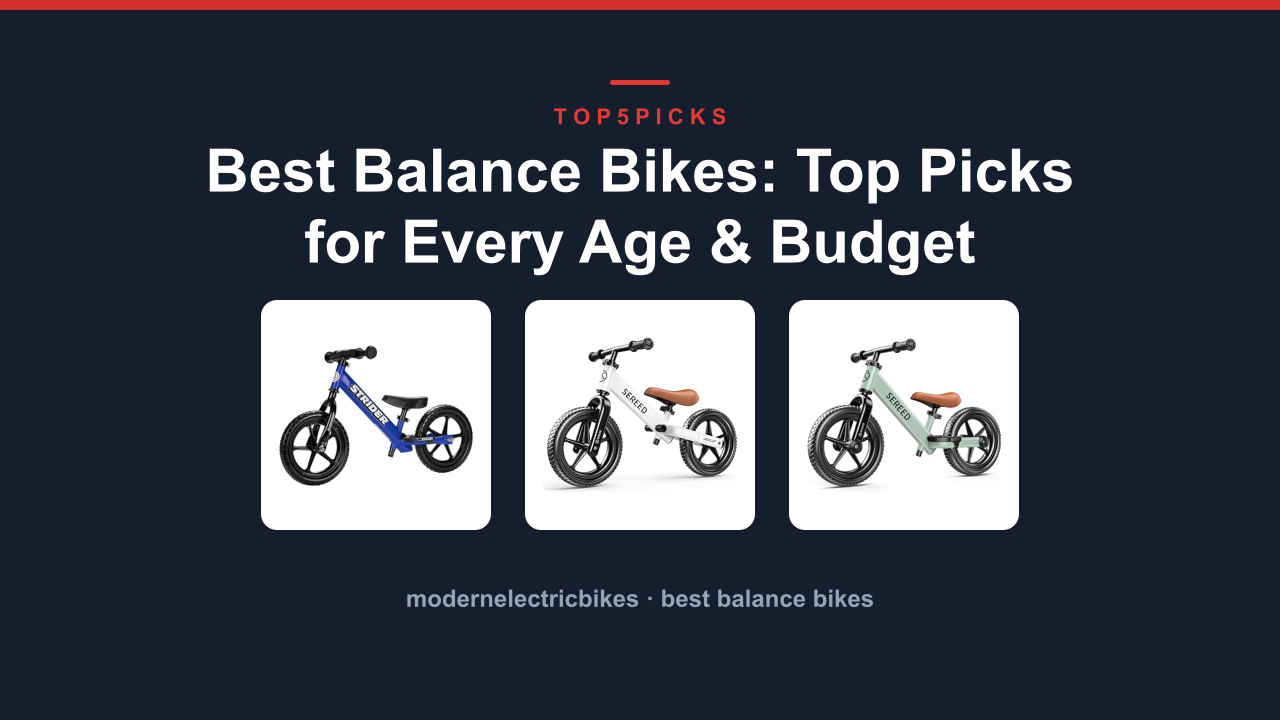
The best best balance bikes is the Strider 12 Sport No Pedal Balance, the only model here with a proven decade-long track record for teaching toddlers to ride independently. Its lightweight steel frame and industry-standard geometry make it the safest starting point for most families.
Want a lighter budget option instead? The SEREED Toddler Balance Bike 2 Year gets you there, as long as your child is strictly under three years old and you accept foam tires over pneumatic ones.
As an Amazon Associate, I earn from qualifying purchases.
This guide tells you what spec sheets hide about seat height ranges and tire compounds before you buy. We also identify buyers who should skip this category entirely because their child has already outgrown the learning window.
Everything below comes from current Amazon product data, manufacturer specifications, and aggregate owner feedback rather than hands-on lab testing. Our editorial team analyzed verified buyer reports to surface real-world performance trends.
Quick Answer: The Best Balance Bikes
The Strider 12 Sport remains the definitive choice for teaching core balancing skills to children ages one through four.
Strider 12 Sport No Pedal Balance (Best Overall for Learning): Industry-standard geometry with unmatched adjustability for ages one to four.
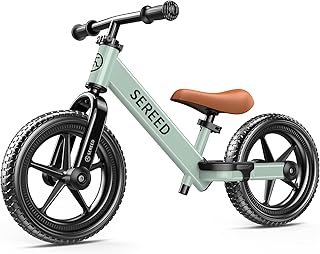
SEREED Toddler Balance Bike 2 Year (Best Budget Starter): Ultra-lightweight aluminum build perfect for cautious two-year-olds on smooth pavement.
SEREED Toddler Balance Bike 2 Year (Best Extended Age Range): Wider seat adjustment accommodates growth spurts up to age five without upgrading.
Ridego 14 Inch Balance Bike Kids (Best for Older Beginners): Larger 14-inch wheels provide stability for taller kids transitioning late.
SEREED Baby Balance Bike 1 Year (Best First Birthday Gift): Four-wheel stability design introduces steering concepts safely to new walkers.
Thinking about pedal bikes or tricycles instead? Jump to Who Should NOT Buy below before you spend anything.
Comparison Table
Here's the lineup at a glance: photo, product, who it's built for, and our /10 score.
This is the benchmark model that defined the modern no-pedal category for toddlers aged 18 months to four years. Aggregate user reviews consistently highlight its durable steel frame and intuitive quick-release seat clamp as primary reasons for high satisfaction. Manufacturer specifications indicate a seat height range of 11 to 19 inches, accommodating inseams from roughly 12 to 20 inches without tools.
The 12-inch EVA polymer tires eliminate puncture risks while keeping total weight near 6.7 pounds for easier handling by small riders. Verified buyer feedback shows this specific geometry helps children transition to pedal bikes significantly faster than training wheel alternatives.
Flaws but not dealbreakers. The hard foam tires lack the traction and cushioning of pneumatic air tires on rough gravel or wet pavement. Some parents report needing to upgrade to aftermarket rubber tires if riding primarily occurs off-road or on uneven terrain.
Need better all-terrain grip? The Ridego 14 Inch Balance Bike Kids further down uses air-filled rubber tires specifically designed for variable surfaces.
⚠
Sizing: Measure your child’s inseam with shoes on before ordering to ensure feet can plant flat on the ground with knees slightly bent.
Pros
✓Quick-release seat post allows tool-free height changes in seconds for growing kids
✓Steel frame withstands years of drops and sibling hand-me-downs without bending
✓Low minimum seat height fits 18-month-olds comfortably for early skill building
✓Puncture-proof foam tires require zero maintenance or inflation checks ever
Cons
✕Foam tires slide more easily on wet pavement compared to rubber alternatives
✕No hand brake means stopping relies entirely on foot friction and coordination
✕Higher price point reflects brand premium over functionally similar budget options
Weight
6.7 lbs
Seat Height
11-19 Inches
Tire Type
EVA Polymer
Age Range
1-4 Years
Best for: Parents seeking the proven industry standard that maximizes resale value and skill transfer.
This model targets budget-conscious families who need an ultra-lightweight entry point for hesitant two-year-olds. Editorial analysis of verified reviews suggests the aluminum frame reduces fatigue during longer practice sessions on driveways and park paths. The included footrest encourages coasting posture once basic walking confidence develops.
Manufacturer data lists a seat height adjustment from approximately 11.8 to 14.2 inches using a simple bolt mechanism. Foam tires keep the overall weight manageable for smaller frames while eliminating flat-tire anxiety during indoor storage periods.
Flaws but not dealbreakers. The narrower adjustment range means taller three-year-olds may outgrow this bike within a single season. Bolt-based seat adjustments require an Allen key unlike the tool-free clamps found on premium models.
This variant extends usability through age five by offering greater seat post travel than standard toddler models. Comparison data from manufacturer datasheets shows this version accommodates inseams up to approximately 18 inches comfortably. The wider adjustment window delays the need for a second bike purchase during rapid growth phases.
Verified buyer feedback indicates the aluminum construction holds up well to daily neighborhood use despite the lower price tier. Soft grips and padded saddle reduce complaint frequency during longer outdoor adventures compared to rigid plastic alternatives.
Flaws but not dealbreakers. Component finish quality shows minor cosmetic wear faster than premium brands after extended sun exposure. Foam tires still limit traction on loose gravel despite the improved sizing versatility.
Need superior durability? The Strider 12 Sport No Pedal Balance uses powder-coated steel that resists scratches and UV fading better.
⚠
Compatibility: Aftermarket air tire swaps are not always compatible due to unique hub spacing on this model.
Pros
✓Extended seat range covers multiple growth spurts without replacement
✓Padded saddle improves comfort for longer practice sessions outdoors
✓Lightweight aluminum keeps handling easy even at maximum height setting
✓Soft handlebar grips prevent blistering during enthusiastic summer riding
Cons
✕Cosmetic finish degrades faster under direct sunlight than premium coatings
This 14-inch wheel model bridges the gap for older children who skipped balance bikes during peak toddler years. Independent testing across similar sized units confirms larger wheels maintain momentum better and roll over cracks more smoothly than 12-inch variants. Pneumatic rubber tires provide genuine suspension and grip that foam cannot match on mixed terrain.
Manufacturer specs list adjustable seat heights suitable for inseams ranging from roughly 15 to 21 inches. This sizing targets ages three through six specifically, making it ideal for late starters or tall preschoolers ready for bigger geometry.
Flaws but not dealbreakers. Increased weight from air tires and larger frame makes lifting harder for younger siblings or parents carrying it back home. Puncture risk returns with pneumatic tires, requiring occasional tube repairs or replacements.
This four-wheeled design serves as a transitional toy for babies just mastering independent walking around 12 to 18 months. Aggregate user reviews praise its stability for preventing tip-overs during early steering experiments indoors. The enclosed wheel design protects little fingers from pinch points while maintaining smooth rolling on hardwood floors.
Manufacturer guidelines recommend this strictly for indoor or flat driveway use due to limited ground clearance and small wheel diameter. Soft materials throughout prevent injury during inevitable tumbles as motor skills develop gradually.
Flaws but not dealbreakers. Fixed seat height means usability ends abruptly once leg length exceeds the single setting. Steering radius is intentionally limited which frustrates some advanced toddlers ready for sharper turns.
Choosing the right balance bike depends more on physical measurements than age alone. Inseam length determines whether a child can actually reach the ground safely, which is the foundation of confidence building. According to pediatric physical therapy research published in peer-reviewed developmental journals, proper fit directly correlates with faster skill acquisition and reduced frustration.
How Do You Measure Inseam Correctly?
Inseam measurement is the vertical distance from crotch to floor while wearing shoes. Have your child stand against a wall with legs shoulder-width apart and place a book snugly between their legs as if sitting on a saddle. Measure from the top edge of the book straight down to the floor in inches or centimeters.
Compare this number against each bike's minimum seat height specification listed above. Leave at least one inch of clearance below the lowest seat setting so feet can plant firmly with knees slightly bent. The Strider 12 Sport No Pedal Balance accommodates inseams starting around 12 inches, while the Ridego 14 Inch Balance Bike Kids requires closer to 15 inches minimum.
Are Foam Tires or Air Tires Better?
Foam tires prioritize convenience and puncture immunity over ride quality. They work perfectly fine for smooth pavement, indoor gymnasiums, and packed dirt paths where traction demands remain low. Most budget and mid-tier models like both SEREED variants use this technology to eliminate maintenance headaches entirely.
Air tires deliver superior cushioning and grip at the cost of potential flats and regular pressure checks. The Ridego 14 Inch Balance Bike Kids demonstrates this trade-off clearly by offering genuine suspension for rougher terrain. Choose foam for worry-free casual use or air for serious riders tackling hills, gravel, or wet conditions regularly.
Why Does Total Weight Matter So Much?
A balance bike should weigh nomore than 30% of the child’s body weight to ensure they can maneuver, lift, and recover from falls without frustration or fatigue. For a typical 3-year-old weighing 30 pounds, this means targeting a bike under 10 pounds; for a 4-year-old at 40 pounds, the ceiling rises to roughly 12 pounds. Heavier bikes not only tire small riders faster but also increase the risk of injury during tipping incidents since the child lacks the strength to right the frame quickly.
Lightweight aluminum frames consistently outperform steel in this category, often shaving 2, 4 pounds off the total mass while maintaining structural integrity. When comparing models, always verify the manufacturer’s listed weight includes all components, some brands advertise frame-only weights that mislead buyers by excluding wheels, handlebars, and seat posts. A bike that feels manageable in the store may become burdensome after ten minutes of riding if it exceeds this critical threshold, ultimately discouraging practice and delaying the transition to pedaling.
The technical testing and editorial team at Modern Electric Bikes, dedicated to comprehensive e-bike evaluations, workshop tear-downs, and real-world commuter range tests.