Best Battery Size for Your Electric Bike: How to Choose
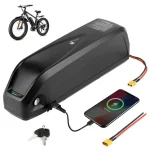
The best best battery size for electric bike is the Ebike Battery 48V 10.4Ah Lectric XP, a plug-and-play replacement built specifically for Lectric XP 1.0, 2.0, and 3.0 step-over frames. It's the pick for anyone who owns that bike, because fit is guaranteed and there's zero wiring guesswork.
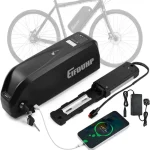
Want more range per charge instead? The 48V 20Ah Ebike Battery with 40A BMS nearly doubles capacity, as long as your frame can physically take the bigger pack and you're comfortable checking connector compatibility yourself.
As an Amazon Associate, I earn from qualifying purchases.
This guide covers what most buyers skip: amp-hours vs. voltage, BMS current limits, and why a "perfect spec sheet" battery can still be useless if the mounting style doesn't match your frame. If you own a proprietary-brand bike with a non-standard mount, skip this category entirely and buy from the manufacturer (there's a whole section on that below).
One honesty note before we start: everything here comes from current Amazon listing data, manufacturer specifications, and each product's buyer-review track record. We didn't ride-test these packs in a lab, and we'll flag where the owner feedback gets shaky.
Quick Answer: The Best Battery Size for Electric Bike
For most Lectric XP owners, the 48V 10.4Ah pack is the safest, simplest buy, and the bigger options below only make sense if you've confirmed frame and connector fit.
- Ebike Battery 48V 10.4Ah Lectric XP (Best overall for Lectric XP owners): Purpose-built drop-in fit with no adapter or rewiring needed.
- 48V 20Ah Ebike Battery Lithium 40A (Best for long-range commuting): 20Ah capacity with a 40A BMS for high-draw motors.
- 48V E-Bike Battery Silver Fish Lithium (Best for 250W to 1000W conversions): Silver Fish mount with lock, LED gauge, and XT60 connector included.
- Ebike Battery 48V 10.4Ah Lectric XP (Best backup/spare pack): Same guaranteed XP fit, ideal as a second pack for swap-and-go riding.
- Ebike Battery 52V 25Ah 2000W (Best for high-power builds): 52V, 25Ah pack rated for 1500W to 2000W motors.
Thinking about a proprietary-brand bike or a totally different voltage system instead? Jump to Who Should NOT Buy below before you spend anything.
Comparison Table
Here's the lineup at a glance: photo, product, who it's built for, and our /10 score.
| Photo | Product | Best for | Score | Buy |
|---|---|---|---|---|
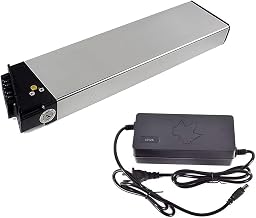 | Ebike Battery 48V 10.4Ah Lectric XP | Direct Lectric XP replacement | 8.7/10 | Check price → |
 | 48V 20Ah Ebike Battery Lithium 40A | Long-range commuter builds | 8.3/10 | Check price → |
 | 48V E-Bike Battery Silver Fish Lithium | Silver Fish frame conversions | 8.1/10 | Check price → |
| Ebike Battery 48V 10.4Ah Lectric XP | Backup and spare pack | 8.4/10 | Check price → |
 | Ebike Battery 52V 25Ah 2000W | High-power 1500W+ builds | 8.0/10 | Check price → |
Scroll sideways on small screens to see every column.
Ebike Battery 48V 10.4Ah Lectric XP: Best Overall for Lectric XP Owners
48V 20Ah Ebike Battery Lithium 40A: Best for Long-Range Commuters
48V E-Bike Battery Silver Fish Lithium: Best for 250W to 1000W Conversions
Ebike Battery 48V 10.4Ah Lectric XP: Best Backup and Spare Pack
Ebike Battery 52V 25Ah 2000W: Best for High-Power Builds
Buying Guide: Voltage, Capacity, BMS Current and Fit
What do voltage and amp-hours actually mean for range?
Think of voltage as pressure and amp-hours (Ah) as fuel tank size. Watt-hours, calculated as voltage times amp-hours, is the number that predicts your range. This lineup spans from about 500Wh (the 48V 10.4Ah Lectric pack) to roughly 1300Wh (the 52V 25Ah pack), which in real-world terms is the difference between a 30-mile commuter ride and a full day of throttle-heavy trail riding.
As of 2026, most mass-market e-bikes run 36V or 48V systems, while 52V has become the enthusiast standard for high-power builds. The rule is simple: match your system voltage exactly, then buy as many amp-hours as your frame and budget allow.
A rough baseline most riders use: expect 1.5 to 2.5 miles of pedal-assist per amp-hour on a 48V system, less on hills, in cold weather, or with heavy throttle use. If your typical ride is 20 miles round trip, a 13Ah pack like the 48V E-Bike Battery Silver Fish Lithium gives you comfortable margin, while a 10.4Ah pack means you'll be charging at work.
Is the BMS current limit as important as capacity?
Yes, and it's the spec most first-time buyers ignore. The Battery Management System (BMS) is the protection circuit inside the pack that prevents over-charge, over-discharge, and over-current. Its amp limit must meet or exceed what your motor and controller can draw.
Here's the quick math: watts divided by voltage equals current draw. A 1000W motor on a 48V system can pull over 20 amps at peak, which is why the 48V 20Ah pack with its 40A BMS suits high-draw setups, while the Silver Fish pack's 25A BMS is appropriately sized for 250W to 1000W motors. Undersize the BMS and the pack will cut out under load, usually at the worst moment, like the bottom of a hill in traffic.
Why does mounting style decide everything?
Because a battery with perfect specs is useless if it won't physically attach to your bike. There are three common approaches in this lineup: model-specific rails (the Lectric XP packs), the slide-in Silver Fish cradle found on many imported and conversion frames, and universal packs that require you to match the base and connector yourself.
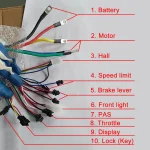
Before ordering any pack, check three things: the connector type (XT60 is the DIY favorite), the cradle dimensions, and whether your controller expects 48V or 52V. Ten minutes with a tape measure and your bike's manual saves you a return shipment.
Lithium e-bike packs are also regulated differently depending on capacity, and the U.S. Pipeline and Hazardous Materials Safety Administration (PHMSA) sets shipping and handling rules for lithium batteries, which is why some packs ship with partial charge and specific storage guidance. Follow it.
How much should you spend?
Capacity and quality both scale with price, but not always evenly. Model-specific packs cost more per watt-hour but eliminate all fit risk. Universal packs deliver the best energy-per-dollar if you're willing to verify compatibility yourself.
Our advice: spend up for guaranteed fit if you're not comfortable with a multimeter, and spend for capacity if your commute already pushes a single charge. A pack that dies two years early because of cheap cells costs more than the premium you skipped.
Who Should NOT Buy Best Battery Size for Electric Bike
Third-party replacement packs are the wrong purchase for a few kinds of buyers. Here's who they are, and what to look at instead.
You own a proprietary-brand bike with a locked ecosystem
If you ride a Bosch, Shimano, Specialized, or Yamaha system, stop here. These manufacturers use proprietary mounts, communication protocols, and firmware handshakes between the battery and controller. A generic pack won't communicate with a Bosch motor, and forcing one can void your warranty and damage the drive unit.
Buy your replacement through the manufacturer or an authorized dealer, even if it costs more.
You're not comfortable with basic electrical checks
Universal packs assume you can identify connector types, verify voltage compatibility, and measure your mounting space. If none of that sounds like your idea of fun, buy either a model-specific pack like the Lectric XP option above or a complete bike upgrade. Mismatched wiring isn't just frustrating; with lithium cells it can be genuinely dangerous.
Your battery is under warranty
If your current pack failed within the manufacturer's warranty period, a third-party replacement is the expensive path. Claim the warranty first. Replacement packs cost real money, and most brands cover cell failure for one to two years.
Final Verdict
For most riders reading this, the winner is the Ebike Battery 48V 10.4Ah Lectric XP. If you own a Lectric XP step-over, it's a zero-risk drop-in replacement, and if you ride long routes, buying two turns your bike into a swap-and-go machine with ~1000Wh total.
Want maximum range in one pack instead? Get the 48V 20Ah Ebike Battery with 40A BMS, the highest-capacity 48V option here and the best energy-per-dollar, as long as you verify your connector and cradle first.
Need a mount with built-in theft protection? The 48V Silver Fish pack includes a keyed lock and LED gauge. Running a 1500W to 2000W build?
The 52V 25Ah pack is the only one here with the voltage and current rating to match.
And if you're on a Bosch or Yamaha system, or your battery is still under warranty, head back to Who Should NOT Buy before spending anything.
FAQ
What's the best Battery Size for Electric Bike overall?
The Ebike Battery 48V 10.4Ah Lectric XP for Lectric XP owners, thanks to its guaranteed drop-in fit and stock-charger compatibility. Everyone else should prioritize matching their system's voltage and mount before comparing capacity.
What size battery do I need for a 500W e-bike?
A 48V 10.4Ah pack (~500Wh) works for casual riding, but 13Ah to 20Ah gives comfortable range margin. At 500W draw, a 20Ah 48V pack keeps the BMS well within its 40A limit.
Can I put a bigger Ah battery on my e-bike?
Yes, if the voltage matches, the connector fits, and your frame or rack can carry the weight. Higher amp-hours doesn't hurt the motor; it just extends range. Never change voltage without checking your controller first.
Is a 52V battery better than 48V?
For high-power builds, yes: 52V delivers more output headroom and slightly better efficiency. But 52V is not a drop-in upgrade for a 48V-only controller, so verify compatibility before buying.
How long do e-bike batteries last?
Most lithium e-bike packs last 3 to 5 years or 500 to 1000 full charge cycles before capacity drops noticeably. Storing at 40 to 60% charge indoors extends that lifespan considerably.
Are cheap e-bike batteries safe?
Reputable listings with a proper BMS, like every pack reviewed here, manage over-charge and over-current risks. The real danger is no-name packs without cell protection, so always confirm a BMS is included and use the supplied charger.

Similar Posts