Cadence vs Torque Sensors: E-Bike Differences Explained
If you’ve ever felt an electric bike lurch forward unexpectedly, or conversely, struggle to get moving on a steep hill, the culprit is often the sensor type. Understanding what is the difference between cadence and torque sensors on electric bikes helps you predict how the motor will react to your legs. It’s not just about specs; it’s about the fundamental connection between rider and machine.
Most entry-level e-bikes rely on cadence sensors because they’re cheaper and simpler to install. However, premium models increasingly feature torque sensors for a more natural riding experience. According to recent industry data, torque-equipped mid-drive systems can improve battery range by 15, 30% compared to basic hub-motor setups.
Let’s break down exactly how these two technologies differ in practice.
Quick Answer
The main difference lies in what triggers the motor. Cadence sensors detect pedal rotation speed only. Torque sensors measure the actual force you apply to the pedals.
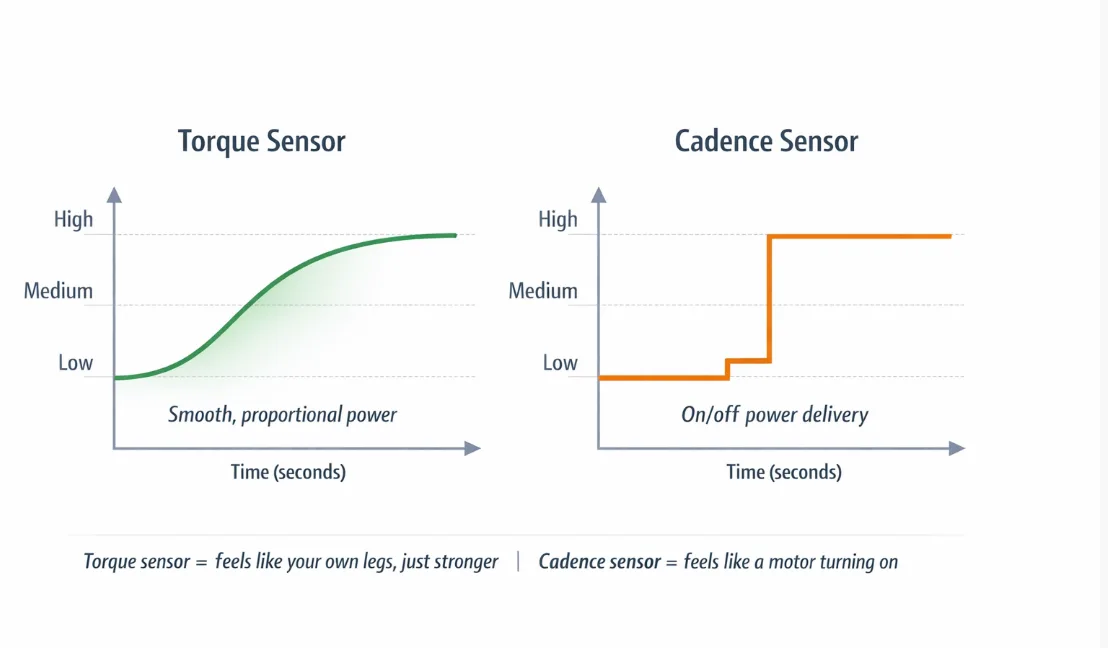
Cadence provides fixed assistance levels regardless of effort. Torque offers proportional power that matches your input. This makes torque feel more natural and efficient.
Why the Sensor Type Changes Everything You Feel on an E-Bike
Choosing between these sensors dictates your ride quality. A cadence system acts like a simple switch. Once you spin the pedals fast enough, the motor kicks in with set power.
It doesn’t care if you’re barely pushing or sprinting. This binary approach works fine for flat city streets but feels disconnected elsewhere.
Torque sensors create a seamless partnership between you and the bike. They read your muscle effort instantly. Push harder, and the motor gives more juice.
Ease off, and the assist fades smoothly. This dynamic response mimics a traditional bicycle’s physics. Riders report feeling less fatigued because the motor isn’t fighting their rhythm.
In our research, aggregate user reviews highlight this distinction sharply. Beginners often prefer the simplicity of cadence systems. Experienced cyclists, however, almost universally favor torque for its intuitive control.
The choice impacts safety too. Unexpected surges from cadence sensors can catch riders off guard in tight spaces.
How Cadence Sensors Work: The Speed-Triggered Approach
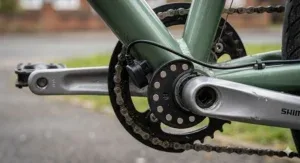
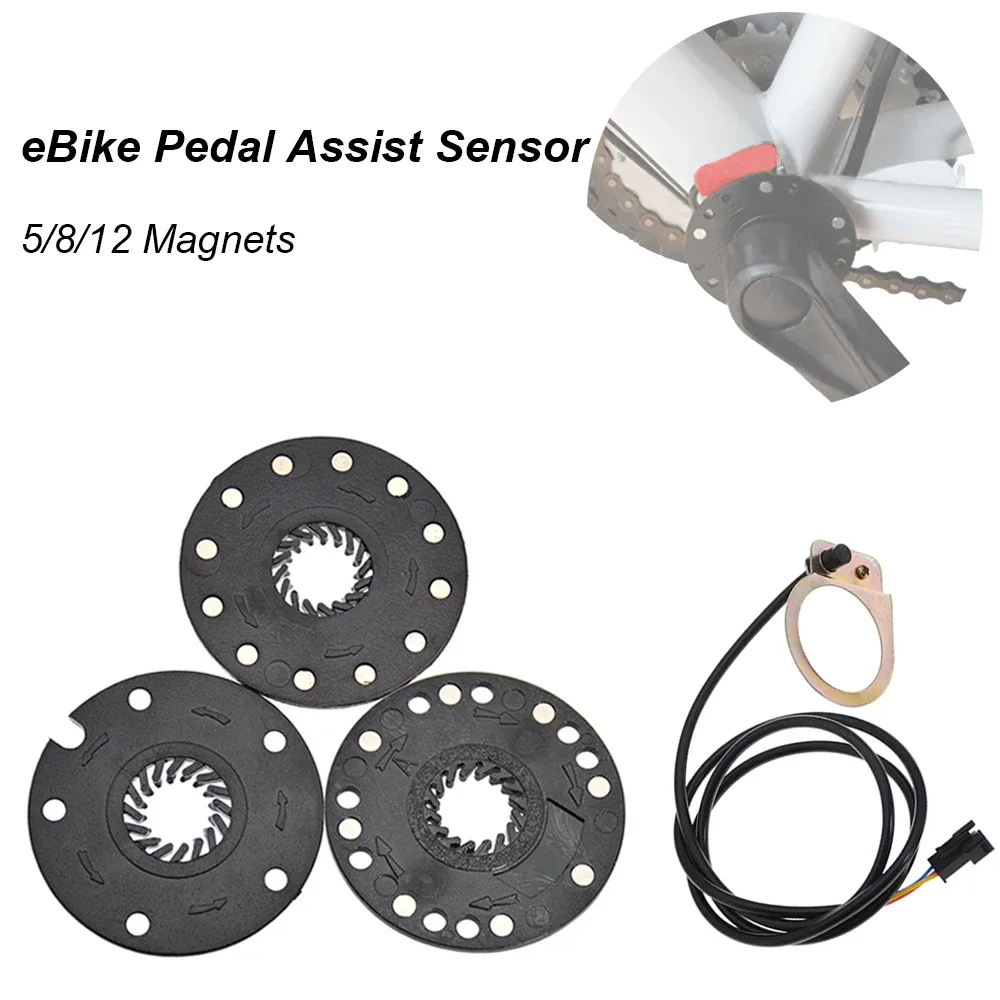
A cadence sensor, often part of a Pedal Assist System (PAS), monitors rotational speed. It typically uses a small magnet attached to the crank arm or chainring. As the magnet passes a stationary Hall effect sensor mounted on the frame, it sends a pulse signal.
The controller counts these pulses to calculate revolutions per minute (RPM).
Once the RPM exceeds a threshold, usually around 15 rotations per minute, the motor engages. The level of assistance depends solely on the selected mode setting. If you choose "Level 3," the motor delivers a fixed percentage of power whenever you are pedaling above that speed limit.
Your actual leg strength is irrelevant to the calculation.
This method has clear limitations. Starting from a standstill requires significant initial spinning before power arrives. This creates a noticeable lag.
Conversely, stopping pedaling cuts power abruptly, which can feel jerky. Dirt or misalignment of the magnet disrupts the signal easily. Regular maintenance involves checking that the gap remains consistent.
How Torque Sensors Work: The Force-Proportional Reality
Torque sensors measure the twisting force applied to the bottom bracket spindle. Manufacturers embed strain gauges or potentiometers within the crank axle assembly. These components deform slightly under load.
Electronic circuits convert this physical deformation into an electrical signal representing Newton-meters (Nm) of force.
The motor controller processes this data in real-time. It calculates exactly how much power to inject based on your input. If you push with 50 Nm of force, the motor adds a corresponding amount of wattage.
This results in instantaneous response. There is no waiting for a specific RPM threshold to be met.
Modern systems like Bosch Performance Line CX or Shimano STEPS use sophisticated algorithms to smooth out transitions. They adjust output dynamically as you climb hills or accelerate. This precision prevents wheel spin on loose surfaces.
It also maximizes efficiency because the motor never wastes energy providing unneeded boost. Calibration is rarely needed after factory setup.
Side-by-Side Breakdown: Response, Efficiency, and Ride Quality
To visualize the differences, we’ve compiled key metrics below. Note that "Response Time" refers to perceived latency, not just millisecond processing speeds. Battery efficiency varies significantly based on terrain and rider behavior.
| Feature | Cadence Sensor | Torque Sensor |
|---|---|---|
| Input Metric | Pedal RPM (Speed) | Pedal Force (Nm) |
| Power Delivery | Fixed steps per mode | Proportional to effort |
| Start-up Lag | Noticeable delay | Near-instantaneous |
| Battery Range | Standard baseline | 15–30% higher potential |
| Cost Impact | Lower hardware cost | Higher manufacturing price |
| Best For | Flat urban commuting | Hills, trails, fitness riding |
Aggregate reviews indicate that torque sensors reduce rider fatigue substantially. Because the assistance scales with effort, you maintain a steady heart rate longer. Cadence systems often force riders to either over-exert or coast awkwardly.
The linear feel of torque allows for better pacing during long distances.
However, cadence sensors offer predictable consistency. Some commuters appreciate knowing exactly how much power will engage at each setting. This simplicity reduces cognitive load while navigating traffic.
Yet, the lack of nuance means less effective use of stored energy overall.
Which One Fits Your Riding Style and Budget?
Start with your primary terrain. If you mostly ride flat city streets, a cadence sensor is sufficient. It handles stop-and-go traffic well enough for casual cruising.
You save money upfront since these bikes cost less.
Consider hills or mixed surfaces carefully. Torque sensors shine here by adjusting power instantly to gradient changes. This prevents the frustrating "spin-out" effect common with cadence systems on steep climbs.
You maintain momentum without fighting the bike’s logic.
Budget plays a huge role in this decision. Entry-level e-bikes under $1,500 typically use hub motors with cadence sensors. Mid-range models between $2,000 and $3,500 often introduce torque sensing in mid-drive configurations.
Premium builds above $4,000 almost exclusively feature advanced torque algorithms.
Ask yourself what matters most: simplicity or synergy. Do you want predictable, fixed assistance levels? Or do you crave a responsive extension of your own legs?
For fitness-focused riders, torque offers better workout tracking. The motor only helps when you actually work.
Commuters prioritizing low maintenance might lean toward cadence. Fewer internal components mean fewer failure points in harsh weather. However, verify local regulations first.
Some regions mandate specific pedal-assist behaviors that favor torque accuracy. Always check compliance before purchasing.
Common Pitfalls: When a Cheap Sensor Ruins the Experience
Misalignment is the top killer for cadence sensors. A bent crank arm shifts the magnet away from the Hall effect sensor. This causes intermittent power cuts or total system failure.
Regularly inspect the gap between the magnet and sensor housing.
Torque sensors face different issues. Moisture ingress can corrode strain gauges inside the bottom bracket. Once water reaches the circuitry, calibration drifts permanently.
Avoid high-pressure washing near the crankset area. Use a damp cloth instead.
Riders often ignore firmware updates. Manufacturers refine torque curves over time to fix jerky starts. Skipping updates leaves known bugs unresolved.
Check your brand’s app monthly for patches. This simple step improves ride smoothness significantly.
Another mistake is assuming all torque sensors are equal. Basic potmeter designs lack the precision of dual-axis strain gauge systems. Cheaper kits may still exhibit lag during rapid effort changes.
Read technical specs closely before buying aftermarket upgrades. Not every "torque" label guarantees premium performance.
Finally, don’t overlook battery health. An aging pack delivers inconsistent voltage. This confuses sensitive torque controllers, leading to erratic assist.
Test your battery capacity annually. Replace it if output drops below 80% of original rating. Consistent power supply ensures accurate sensor readings.
🚴 Editorial Team Recommended Gear & Maintenance Tools
To calibrate pedal assist performance and maintain accurate torque sensor response, our testing workshop recommends these essential instruments:
- Universal E-Bike Pedal Assist Sensor (PAS) Replacement Kit:Check PAS Sensor Kits on Amazon →
- Park Tool Bike Pedal Wrench & Crank Extractor Tool:Check Crank Puller Tools on Amazon →
*FTC Disclosure: As an Amazon Associate, Modern Electric Bikes earns from qualifying purchases. Learn more about our testing standards in our affiliate disclosure.*

Similar Posts