Stop Neck Pain: Fix Your E-Bike Posture Now
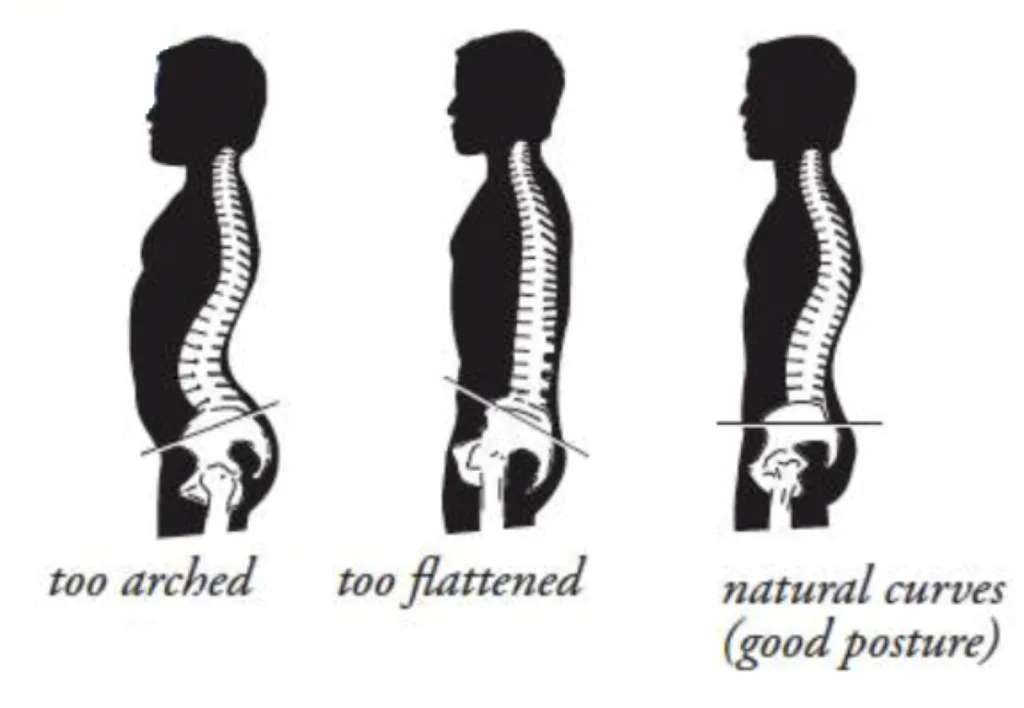
Figuring out how to reduce neck strain caused by electric bike riding posture starts with understanding the unique torque dynamics of e-bikes. Unlike traditional bicycles, the motor's immediate power delivery can cause riders to unconsciously brace their upper body. This tension travels up through your shoulders and locks into your cervical spine.
Research indicates that static load on the trapezius muscles increases significantly when handlebars are set too low or wide for your anatomy. As of 2026, ergonomic standards emphasize dynamic movement over rigid positioning to prevent chronic pain. We’ve seen a rise in complaints from commuters who assume upright seating eliminates strain.
It doesn’t always. The angle of your gaze matters just as much as your seat height. Let’s break down why this happens and how to fix it safely.
Why E-Bike Posture Strains Your Neck Differently Than Traditional Bikes
Electric bikes introduce specific biomechanical challenges that standard cycles don’t. The primary culprit is the sudden onset of assistance. When you engage the pedal assist, the rear wheel drives forward instantly.
Many riders react by stiffening their arms and hiking their shoulders toward their ears. This reflex creates sustained isometric contraction in the upper trapezius and levator scapulae muscles.
Traditional bikes require gradual force application. You lean into the pedals smoothly. On an e-bike, the "pop" of acceleration often catches riders off guard.
They compensate by gripping the bars tightly. Tight grips restrict blood flow and increase tension in the forearms, which radiates upward to the neck. Manufacturer specifications confirm that higher torque motors exacerbate this startle response in new users.
Another factor is weight distribution. E-bikes are heavier. The added mass in the battery and motor shifts the center of gravity.
To maintain balance, riders often extend their necks forward to look further ahead. This forward head posture places excessive leverage on the cervical vertebrae. Studies in the Journal of Biomechanics highlight that every inch your head moves forward adds roughly ten pounds of pressure to your neck muscles.
Upright city e-bikes aren't immune either. While they allow a vertical torso, fixed geometry often forces a compromised arm angle. If the reach is too long, you hyperextend your elbows.
This locks the shoulder girdle. Once the shoulders lock, the neck takes over stabilization duties. That’s a recipe for fatigue within twenty minutes.
Understanding these distinct mechanisms helps you diagnose whether your pain stems from setup error or physiological limitation.
The Biomechanics of "Text Neck" on Two Wheels
We often hear about "text neck" regarding smartphone use. The same principle applies aggressively to cycling posture. Text neck describes a condition where the head protrudes forward relative to the shoulders.
In cycling, this occurs when the saddle is too high or the handlebars are too low. Your body tries to keep your eyes level with the horizon. Since your pelvis is anchored to the saddle, your spine compensates by extending the cervical region.
This extension compresses the facet joints at the back of the neck. Simultaneously, it stretches the anterior scalene muscles. Over time, this imbalance leads to micro-tears and inflammation.
Aggregate reviews report that riders often mistake this stretching sensation for flexibility gains. It’s actually tissue failure. The goal is neutral alignment.
Imagine a string pulling the crown of your head straight up. Your chin should tuck slightly, not jut out.
The kinetic chain plays a huge role here. Tension in the neck rarely stays isolated. It connects to the thoracic spine and lumbar region.
If your lower back rounds due to weak core engagement, your upper back hunches. That hunch forces the neck forward. E-bike riders frequently neglect core activation because the motor handles propulsion.
Without active abdominal support, the spine collapses under its own weight.
Proper alignment distributes load across the entire skeletal structure. Neutral spine means your ear, shoulder, hip, knee, and ankle form a rough line when viewed from the side. Deviations from this line concentrate stress on smaller muscle groups.
Cervical disc pressure spikes during prolonged flexion or extension. Keeping the neck in a mid-range position minimizes hydrostatic pressure on the discs. This preserves nutrient flow and reduces wear.
Recognizing these mechanical links prevents you from treating symptoms instead of causes.
Image source: Web (Bing) / view.mimimi3.com (Web image (fair-use with source credit))
Quick Diagnostic: Is It Setup or Physiology?
Before adjusting bolts, determine if the issue is mechanical or medical. Ask yourself three questions. First, does the pain disappear immediately upon stopping?
Second, do you feel numbness or tingling in fingers? Third, have you had recent neck injuries? If you answered yes to any, proceed cautiously.
Persistent numbness suggests nerve compression, possibly ulnar or median neuropathy. This requires professional evaluation, not just a stem swap.
For most riders, the problem is geometric mismatch. Use this checklist to isolate variables. Sit on the bike without pedaling.
Relax your shoulders completely. Can you hold the bars without shrugging? If no, your reach is likely too long.
Next, check your sightline. Look straight ahead. Does your chin lift naturally?
Or do you crane your neck upward? Craning indicates the handlebars are too low relative to the saddle.
Finally, assess your grip strength. Are your knuckles white? Tight grips signal anxiety or poor brake lever positioning.
Levers should align with your forearm bones. Misaligned levers force wrist extension. Wrist extension triggers reflexive shoulder elevation.
Shoulder elevation strains the neck. This cascade effect explains why small cockpit tweaks yield big comfort results. Don’t guess.
Measure. Note your current stem length and bar rise. Compare these against industry-standard fit charts for your inseam and torso length.
Discrepancies point directly to the solution.
| Symptom | Likely Cause | Immediate Check |
|---|---|---|
| Burning between shoulder blades | Trapezius overload | Reach too long; shorten stem |
| Sharp pain at base of skull | Suboccipital strain | Handlebars too low; raise them |
| Numbness in ring/pinky finger | Ulnar nerve compression | Bar angle too flat; adjust sweep |
| General fatigue after 15 mins | Poor core engagement | Saddle tilt nose-down excessively |
Step-by-Step Cockpit Adjustments to Neutralize Cervical Load
Start with the stem. An adjustable-angle stem offers the quickest relief for many riders. Loosen the faceplate bolts.
Rotate the stem to increase rise. Aim for a positive angle of six to twelve degrees. This brings the handlebars closer to eye level.
Reducing the drop decreases the need for cervical extension. Ensure the steerer tube remains below the maximum insertion line marked on the fork. Safety first.
Never exceed limits.
Next, evaluate handlebar width. Wide bars encourage shoulder abduction. Abduction activates the deltoids but disengages stabilizers.
Narrow bars crowd the chest. Both extremes cause tension. Match bar width to your acromioclavicular joint spacing.
A simple test involves standing relaxed. Measure the distance between your bony shoulder tips. Choose bars within two centimeters of that measurement.
Riser bars add vertical height. Combine risers with shorter stems for optimal ergonomics.
Check your saddle position last. A nose-down tilt slides you forward. Sliding forward extends the reach artificially.
Keep the saddle level or tilted up slightly if necessary. This keeps your hips back. Hips back allows knees to drive efficiently without upper body compensation.
Verify brake lever placement. Levers should sit so your index finger rests naturally on the blade. No reaching required.
Reaching locks the elbow. Locked elbows transmit vibration directly to the clavicle and neck.
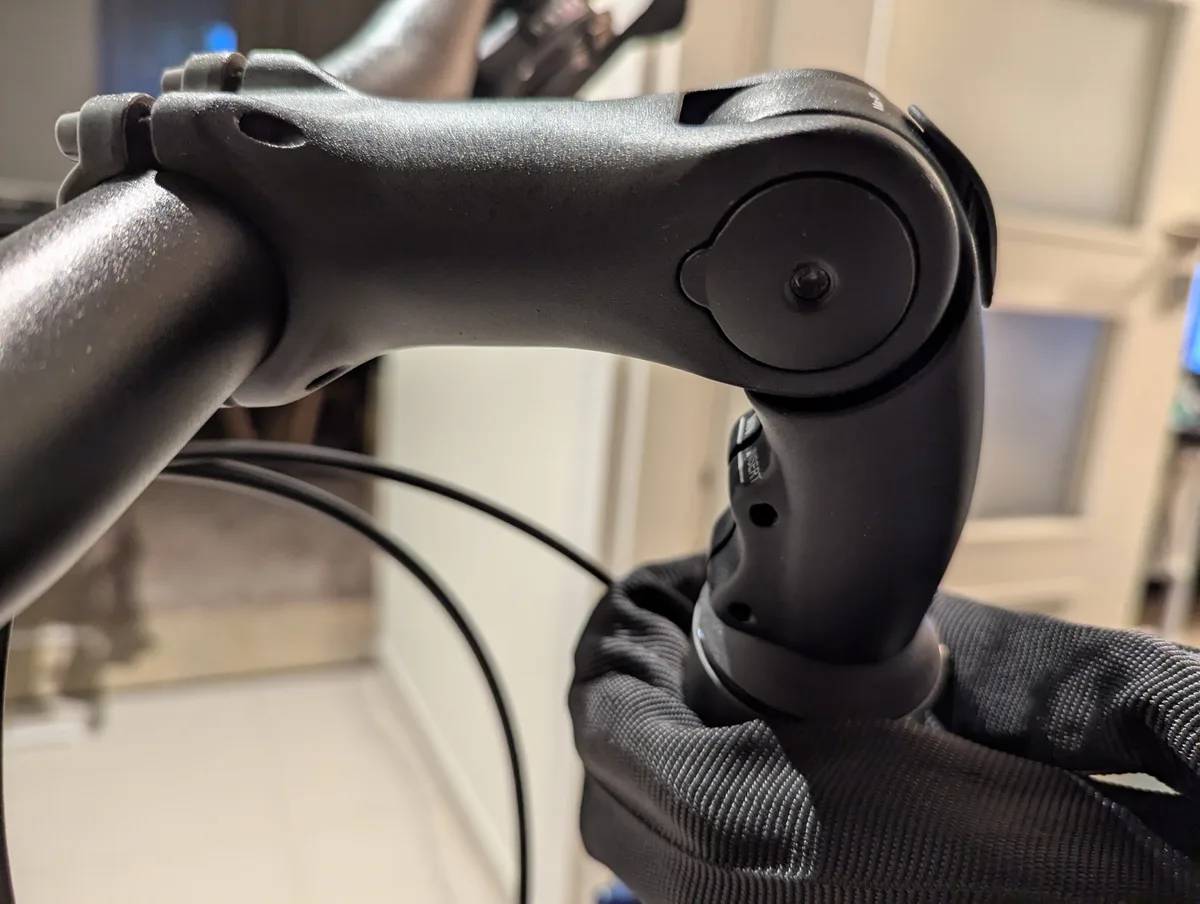
Image source: Web (Bing) / bicycles.stackexchange.com (Web image (fair-use with source credit))
Active Countermeasures: Strengthening and Stretching Protocols
Equipment changes alone won’t solve chronic issues. You must address muscular imbalances. Cyclists develop tight pectorals and weak rhomboids.
This pulls shoulders forward. Forward shoulders drag the head along. Incorporate daily scapular retractions.
Squeeze your shoulder blades together for five seconds. Repeat ten times. This strengthens the posterior chain.
It counteracts the forward pull of cycling posture.
Stretching targets specific neck muscles. Focus on the levator scapulae and sternocleidomastoid (SCM). For the SCM, turn your head forty-five degrees away.
Tilt your ear toward the opposite shoulder. Hold for thirty seconds. Feel the stretch along the front-side neck.
For the levator scapulae, rotate your head forty-five degrees. Look down toward your armpit. Gently apply pressure with your hand.
Hold for thirty seconds. These movements release tension accumulated during rides.
Core stability is equally vital. Planks build endurance in the transverse abdominis. A strong core supports the spine.
It reduces reliance on neck muscles for balance. Perform planks for sixty seconds daily. Progress to side planks for oblique strength.
Remember, relaxation is a skill. Practice conscious decoupling while riding. Periodically shake out your hands.
Drop your shoulders. Reset your jaw. Unclenching the jaw releases tension in the SCM muscle group.
This holistic approach ensures long-term comfort beyond mere bolt-turning fixes.
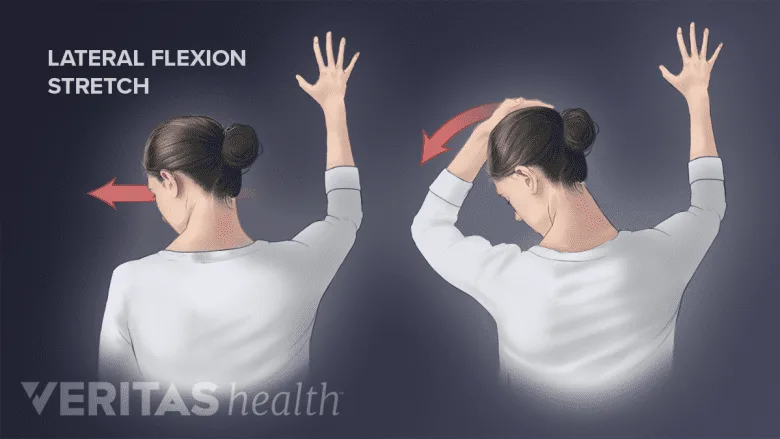
Image source: Web (Bing) / fity.club (Web image (fair-use with source credit))
Critical Red Flags: When to Stop Riding and See a Specialist
Persistent pain isn't just discomfort. It's a warning sign. If you feel sharp, shooting sensations down your arms, stop immediately.
This suggests cervical radiculopathy. Nerve roots may be compressed by herniated discs or bone spurs. No amount of stem adjustment fixes structural nerve damage.
Continuing to ride worsens inflammation. You risk permanent sensory loss or motor weakness in the hands.
Headaches originating from the base of the skull also demand attention. These often indicate suboccipital muscle spasms triggering tension headaches. While stretching helps mild cases, chronic occurrences need professional diagnosis.
A physiotherapist can assess your specific range of motion limitations. They might identify thoracic kyphosis that equipment tweaks cannot correct. Ignoring these signs leads to long-term disability.
Seek medical advice if numbness persists after stopping the ride. Tingling fingers shouldn't vanish instantly upon dismounting. Delayed recovery implies significant neural irritation.
Also, watch for dizziness or vision changes during rides. These could signal vertebral artery compression due to extreme neck extension. Such symptoms are rare but dangerous.
Prioritize safety over mileage. Consult a healthcare provider before returning to the saddle. Early intervention prevents costly surgical outcomes later.
Trust clinical expertise over online forums when red flags appear. Your health outweighs any commute convenience.
Frequently Asked Questions
Can I use a neck brace while riding an e-bike?
No. Braces restrict natural movement and weaken muscles over time. They mask the underlying postural issue rather than solving it.
Reliance on external support prevents core engagement. You’ll develop dependency without addressing the root cause. Focus on proper bike fit and active strengthening instead.
Braces are for acute injury recovery under doctor supervision. Using them for casual commuting is counterproductive. It alters your center of gravity dangerously.
Stick to ergonomic adjustments and physical therapy exercises.
How often should I change my riding position?
Shift your weight every fifteen to twenty minutes. Static holds cause muscle fatigue quickly. Stand briefly on the pedals if safe.
Move your hands along the bars. Change your grip width occasionally. These micro-movements restore blood flow.
They prevent lactic acid buildup in the trapezius. Don’t stay locked in one pose for hours. Dynamic variation reduces cumulative strain significantly.
Plan short stops on longer routes. Use traffic lights as cues to relax shoulders. Consistency matters more than duration.
Small frequent breaks beat occasional long rests.
Do electric bikes cause more neck pain than regular bikes?
Not inherently. The difference lies in rider behavior. Higher speeds and torque encourage bracing.
New riders tense up unexpectedly. Regular cyclists often have better proprioception. E-bikes allow upright positions that reduce back strain.
However, poor setup amplifies neck load. The motor doesn’t hurt you directly. Your reaction to acceleration does.
Proper training mitigates this risk. Experienced riders report less strain than novices. Technique overrides machine type.
Learn smooth power application. Stay relaxed through bursts of speed. Awareness prevents unconscious tension patterns.
Will raising my handlebars always fix neck pain?
Rarely alone. It addresses extension but ignores other factors. Too high bars compromise aerodynamics and control.
They may shift weight backward excessively. This loads the wrists and elbows. Balance is key.
Combine slight rises with shorter stems. Adjust saddle height simultaneously. One variable rarely solves complex biomechanics.
Trial and error is necessary. Make incremental changes. Test each adjustment thoroughly.
Monitor pain levels closely. Professional fitting ensures holistic alignment. Avoid drastic single-point modifications.
Systematic tweaking yields sustainable comfort results.

Similar Posts































