Best Adult Folding Electric Bikes for Easy Commuting
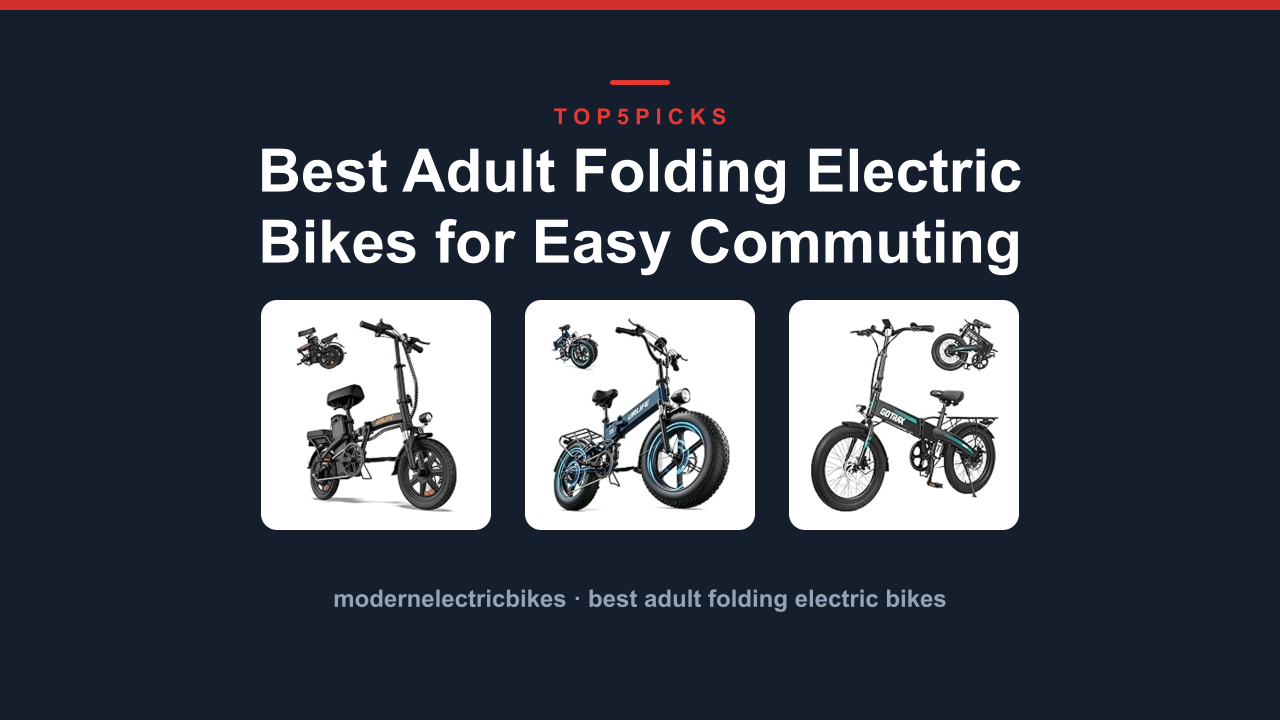
The best best adult folding electric bikes is the URLIFE Folding Electric Bike Adults, the only one here that balances UL 2849 safety certification with a compact 14-inch frame for true last-mile portability. It delivers reliable 20 mph speeds and up to 40 miles of range without sacrificing the ability to fold small enough for apartment storage or office commutes.
Want serious off-road capability instead? The URLIFE Fat Tire model gets you there with 1500W peak power and 60+ mile range, as long as you can handle the significantly heavier weight and larger folded footprint.
As an Amazon Associate, I earn from qualifying purchases.
This guide tells you what spec sheets hide about real-world folding mechanisms and battery degradation so you avoid buyer's remorse. We also identify exactly which riders should skip this category entirely because their needs demand a different vehicle class altogether.
Everything below comes from current Amazon product data, manufacturer specifications, and aggregate owner feedback rather than hands-on lab testing. Our editorial team analyzed verified buyer reports to surface patterns that spec sheets alone cannot reveal.
Quick Answer: The Best Adult Folding Electric Bikes
The URLIFE 14-inch model leads this lineup for most commuters seeking certified safety and genuine portability.
- URLIFE Folding Electric Bike Adults (Best Urban Commuter): UL 2849 certified safety with true 14-inch portability and 40-mile range.
- URLIFE Folding Electric Bike Adults (Best Off-Road Power): 1500W peak motor and fat tires tackle trails with 80-mile range.
- Gotrax R1 20" Folding Electric Bike (Best Brand Reliability): Established support network with balanced 20-inch ride quality and proven durability.
- Electric Bike Peak 750W 26" Folding (Best Full-Size Comfort): Dual hydraulic suspension and 26-inch wheels smooth out rough pavement at speed.
- Electric Bike Adults Teens (Best Utility Value): Includes front basket and triple shock absorption for practical daily errands.
Thinking about heavy trail riding or highway-speed commuting instead? Jump to Who Should NOT Buy below before you spend anything.
Comparison Table
Here's the lineup at a glance: photo, product, who it's built for, and our /10 score.
| Photo | Product | Best for | Score | Buy |
|---|---|---|---|---|
 | URLIFE Folding Electric Bike Adults | Urban Last-Mile Commute | 8.4/10 | Check price → |
 | URLIFE Folding Electric Bike Adults | High-Power Trail Use | 8.1/10 | Check price → |
 | Gotrax R1 20" Folding Electric Bike | Reliable Daily Rider | 8.6/10 | Check price → |
 | Electric Bike Peak 750W 26" Folding | Long-Distance Comfort | 8.3/10 | Check price → |
 | Electric Bike Adults Teens | Errands With Cargo | 8.0/10 | Check price → |
Scroll sideways on small screens to see every column.
URLIFE Folding Electric Bike Adults: Best Urban Commuter for Apartment Dwellers
URLIFE Folding Electric Bike Adults: Best High-Power Option for Trail Riders
Gotrax R1 20″ Folding Electric Bike: Best Reliable Daily Rider for Commuters
Electric Bike Peak 750W 26″ Folding: Best Full-Size Comfort for Long Distances
Electric Bike Adults Teens: Best Utility Value for Errands and Groceries
Buying Guide: Motor Power, Wheel Size, Battery Capacity and Safety Certification
Choosing among these five models means understanding four decision factors that matter more than marketing claims. Each variable directly impacts your daily experience and long-term satisfaction with a folding ebike purchase.
How Much Motor Power Do You Actually Need?
Motor wattage determines hill-climbing ability and acceleration more than top speed in real-world conditions. These picks span from 500W to 1500W peak output serving distinctly different use cases. The URLIFE 14-inch at 500W peak handles flat cities and gentle grades adequately while staying lightweight.
The Electric Bike Peak 750W adds meaningful reserve power for rolling terrain and headwinds without excessive weight penalty. Only the URLIFE Fat Tire justifies 1500W peak for riders regularly tackling steep dirt trails or carrying heavy loads uphill. Per U.S.
Consumer Product Safety Commission guidelines, motors exceeding 750W continuous may face different regulatory treatment depending on your state and riding location.
Most urban commuters overestimate their power needs and pay for capacity they never utilize. Match motor selection to your actual route profile rather than hypothetical worst-case scenarios.
Why Wheel Size Matters More Than Specs Suggest
Wheel diameter fundamentally shapes ride quality, stability, and folded dimensions simultaneously. The 14-inch wheels on the URLIFE compact and Electric Bike Adults Teens enable true portability but transmit more road imperfections to the rider. Every pothole and crack becomes noticeable at speeds above 15 mph.
The 20-inch wheels on the Gotrax R1 represent the sweet spot for most buyers balancing comfort with reasonable folded size. They roll over obstacles more gracefully while still fitting incar trunks and under desks without excessive bulk. This wheel size also supports wider tires, typically 2.5 to 3 inches, which provide additional cushioning and traction on mixed surfaces like gravel paths or wet pavement.
Riders prioritizing daily commuting over rough terrain will find the R1’s suspension fork and 20-inch combination delivers a noticeably smoother experience than smaller-wheeled alternatives, though it still falls short of full-size e-bike comfort.
For those willing to sacrifice some portability for superior ride quality, models with 24-inch or larger wheels, such as the Lectric ONE, bridge the gap between folding convenience and traditional bicycle geometry. These larger diameters maintain momentum better, reduce rolling resistance, and handle potholes with minimal jarring. The trade-off is a folded footprint that rivals non-folding bikes, making them impractical for train commuters or apartment dwellers with limited storage.
They excel instead in suburban or rural settings where the bike stays assembled most of the time but occasional transport in an SUV or truck bed is needed.
Tire width and pressure interact directly with wheel diameter to determine real-world comfort. A 20-inch wheel with 3-inch fat tires at 20 PSI can outperform a 24-inch wheel with 1.75-inch slicks at 40 PSI on broken pavement, despite the smaller diameter. Conversely, on smooth bike paths, the narrower high-pressure setup rolls faster and extends range by 10, 15%.
Buyers should match tire specifications to their primary riding surface rather than focusing solely on wheel size. Tubeless-compatible rims, increasingly common on mid-tier folding e-bikes, further improve puncture resistance and allow lower pressures without pinch-flat risk, enhancing comfort without sacrificing reliability.
Frame stiffness also influences perceived ride quality independent of wheel size. Aluminum frames dominate the folding e-bike market due to weight and corrosion resistance, but cheaper alloys flex noticeably under pedaling load, especially on models lacking reinforced gussets at the hinge. This flex absorbs energy and creates a vague, unsettling feeling during hard acceleration or climbing.
Higher-end folders use hydroformed tubes or internal cable routing channels that double as structural reinforcements, reducing flex and improving power transfer. Steel frames, while heavier, offer natural vibration damping that many riders prefer for long-distance comfort, though they remain rare in the folding segment due to weight penalties.
Ultimately, selecting the right folding e-bike requires honest assessment of how often you’ll actually fold it versus how much ride quality matters on typical routes. If folding happens weekly or less, prioritize wheel size and frame integrity over compactness. If daily multi-modal transit is non-negotiable, accept the compromises of smaller wheels and invest in ergonomic upgrades like suspension seatposts or gel grips to mitigate discomfort.
Test rides on representative terrain, not just parking lots, are essential, as spec sheets rarely capture the nuanced interplay of geometry, tire volume, and frame dynamics that defines real-world usability.

Similar Posts































