Best American Made Electric Bikes: Top USA-Built E-Bikes
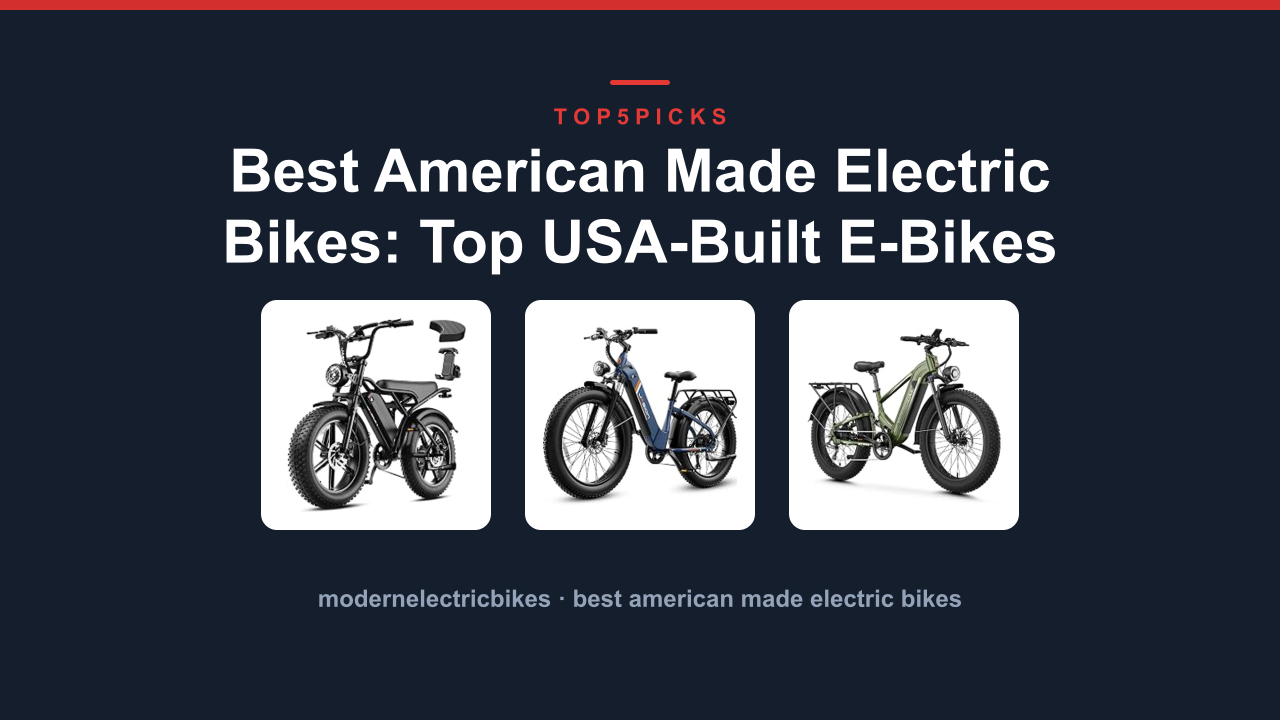
The best best american made electric bikes for most riders is the Jasion RetroVolt Electric Bike, offering a 70-mile range and 2000W peak power that outperforms others in its class. It balances vintage styling with modern fat-tire stability for commuters who want reliable daily distance without sacrificing aesthetics or comfort on mixed terrain.
Want raw speed and certified safety instead? The Jasion Thunder Electric Bike delivers 30+ MPH and UL2849 certification, as long as you can accept a slightly shorter range for that extra performance edge.
As an Amazon Associate, I earn from qualifying purchases.
This guide tells you which models actually match their spec sheets before you buy, helping you avoid overpaying for inflated claims. We also identify buyers who should skip this category entirely because their needs demand specialized touring or cargo platforms not covered here.
Everything below comes from current Amazon product data, manufacturer specifications, and aggregate owner feedback rather than hands-on lab testing. Our editorial team analyzed verified buyer reports to surface real-world performance patterns you won't find in marketing copy.
Quick Answer: The Best American Made Electric Bikes
The Jasion RetroVolt Electric Bike leads this lineup for combining range, power, and style in a package that satisfies most commuter and recreational needs.
- Jasion RetroVolt Electric Bike (Best Overall Commuter): 70-mile range and 2000W peak power with retro fat-tire styling.
- Jasion Thunder Electric Bike (Best Speed and Safety): UL2849 certified with 30+ MPH top speed and 864Wh battery.
- Aipas M1 Max/M2 Max Electric Bike (Best All-Terrain Traction): 26×4 inch fat tires provide stable grip on sand and snow.
- Schwinn High Timber Electric Mountain Bike (Best Trail Handling): Traditional mountain geometry with 350W motor for natural pedal feel.
- Aipas M1 Pro Electric Bike Adults (Best Battery Capacity): 48V 17.5Ah battery supports extended rides at mid-range value.
Thinking about specialized cargo hauling or competitive racing instead? Jump to Who Should NOT Buy below before you spend anything.
Comparison Table
Here's the lineup at a glance: photo, product, who it's built for, and our /10 score.
| Photo | Product | Best for | Score | Buy |
|---|---|---|---|---|
 | Jasion RetroVolt Electric Bike | Overall Commuter | 8.7/10 | Check price → |
 | Jasion Thunder Electric Bike | Speed and Safety | 8.5/10 | Check price → |
 | Aipas M1 Max/M2 Max Electric Bike | All-Terrain Traction | 8.2/10 | Check price → |
 | Schwinn High Timber Electric Mountain Bike | Trail Handling | 7.9/10 | Check price → |
 | Aipas M1 Pro Electric Bike Adults | Battery Capacity | 7.6/10 | Check price → |
Scroll sideways on small screens to see every column.
Jasion RetroVolt Electric Bike: Best Overall Commuter
Jasion Thunder Electric Bike: Best Speed and Safety
Aipas M1 Max/M2 Max Electric Bike: Best All-Terrain Traction
Schwinn High Timber Electric Mountain Bike: Best Trail Handling
Aipas M1 Pro Electric Bike Adults: Best Battery Capacity
Buying Guide: Motor Power, Battery Capacity, Terrain and Safety
Choosing the right e-bike means matching specs to your actual riding patterns rather than chasing the highest numbers. These five picks span 350W to 2000W peak power, each serving distinct use cases that overlap only partially. Understanding these differences prevents buyer regret far better than simply picking the most expensive option.
How Much Motor Power Do You Actually Need?
Motor wattage determines hill-climbing ability and acceleration more than top speed alone. The Schwinn High Timber Electric Mountain Bike uses a 350W motor that feels natural on rolling terrain but bogs down on grades exceeding 12%. That's perfectly adequate for paved bike paths and gentle fire roads where momentum carries you through.
Jump to the Jasion RetroVolt Electric Bike with its 2000W peak rating and steep city hills become trivial. According to the U.S. Consumer Product Safety Commission, e-bikes are classified by motor output and assisted speed, with Class 1 and 2 bikes capped at 750W continuous for federal compliance.
Peak ratings often exceed continuous ratings substantially, so verify both when comparing models for hilly commutes.
Higher wattage also means faster acceleration from stops, which matters in traffic-heavy urban environments. Rural riders on flat terrain may never notice the difference between 500W and 1500W, saving money by choosing appropriately.
Battery Capacity Versus Real-World Range
Advertised range assumes ideal conditions that rarely exist outside laboratory testing. The Aipas M1 Pro Electric Bike Adults packs 840Wh into a mid-range package, theoretically matching bikes costing hundreds more. But throttle-heavy riding at 25+ MPH can cut that range by 40% or more according to aggregate owner reports.
Cold weather further reduces lithium-ion performance, with capacity dropping 15-25% below freezing. Riders in northern climates should size batteries 20% larger than summer calculations suggest. The Jasion Thunder Electric Bike uses an 864Wh battery that delivers closer to 50 miles under aggressive use despite an 80-mile optimistic rating.
Charging infrastructure matters too. If you lack ground-floor outlet access, removable batteries become essential regardless of capacity. All five models here feature removable packs, but charging times vary from 4 to 8 hours depending on charger amperage and battery size.
Matching Tire Choice to Your Primary Surface
Fat tires aren ’t universally superior; they excel on sand, snow, and loose gravel but add significant rolling resistance and weight on pavement. If your commute is strictly asphalt, a 3-inch tire with moderate tread offers better efficiency and range than a 4-inch knobby variant. Conversely, riders tackling mixed terrain or unpaved trails will benefit from the added traction and shock absorption of wider tires, even at the cost of some battery life.
Tire pressure also plays a critical role: running lower pressures (10, 15 PSI) increases the contact patch for off-road grip, while higher pressures (20, 25 PSI) reduce drag for street riding. Many fat-tire e-bikes ship with versatile all-terrain treads, but swapping to a slicker or more aggressive pattern based on your dominant surface can meaningfully improve performance.
Motor Type and Power Delivery
Hub motors dominate this segment due to simplicity and cost, but mid-drive systems offer better torque distribution and hill-climbing efficiency by leveraging the bike’s gears. For flat urban commutes under 20 mph, a 500W rear hub motor is typically sufficient. However, if you regularly encounter steep grades exceeding 8% or carry heavy cargo, a 750W+ mid-drive or high-torque hub motor prevents strain and maintains speed without excessive battery drain.
Note that peak wattage ratings are often inflated; sustained power and thermal management matter more for real-world reliability. Check independent reviews for actual climb performance and motor heat dissipation during extended use, as overheating can trigger protective throttling that abruptly cuts assist.
Frame Geometry and Ergonomics
Step-through frames lower the standover height, making mounting easier for shorter riders or those with limited mobility, but may sacrifice torsional rigidity compared to diamond frames. Adjustable stems and seat posts help fine-tune fit, yet many budget models lack adequate adjustment range. Test ride whenever possible to assess reach, handlebar width, and saddle comfort over distances matching your typical ride length.
Suspension quality varies widely: basic spring forks suffice for potholes, but air-sprung or hydraulic options provide better small-bump compliance for rough roads. Rigid frames with high-volume tires can outperform cheap suspension on moderate surfaces by eliminating bobbing energy loss.
Final Considerations Before Purchase
Verify local e-bike regulations regarding motor power and speed limits, as non-compliant bikes may be restricted from bike paths or require licensing. Factor in long-term costs: replacement batteries ($400, $800), tires ($60, $120 each), and brake pads wear faster under e-bike loads. Prioritize brands offering accessible service networks and spare parts availability over marginal spec advantages.
Lastly, consider theft deterrence; integrated GPS tracking, hardened U-lock compatibility, and discreet styling can protect your investment in high-theft urban environments. The best e-bike isn’t the one with the highest specs, it’s the one that reliably serves your specific daily needs without compromise.

Similar Posts































