Best Balance Bikes for Toddlers: Top Picks for Little Riders
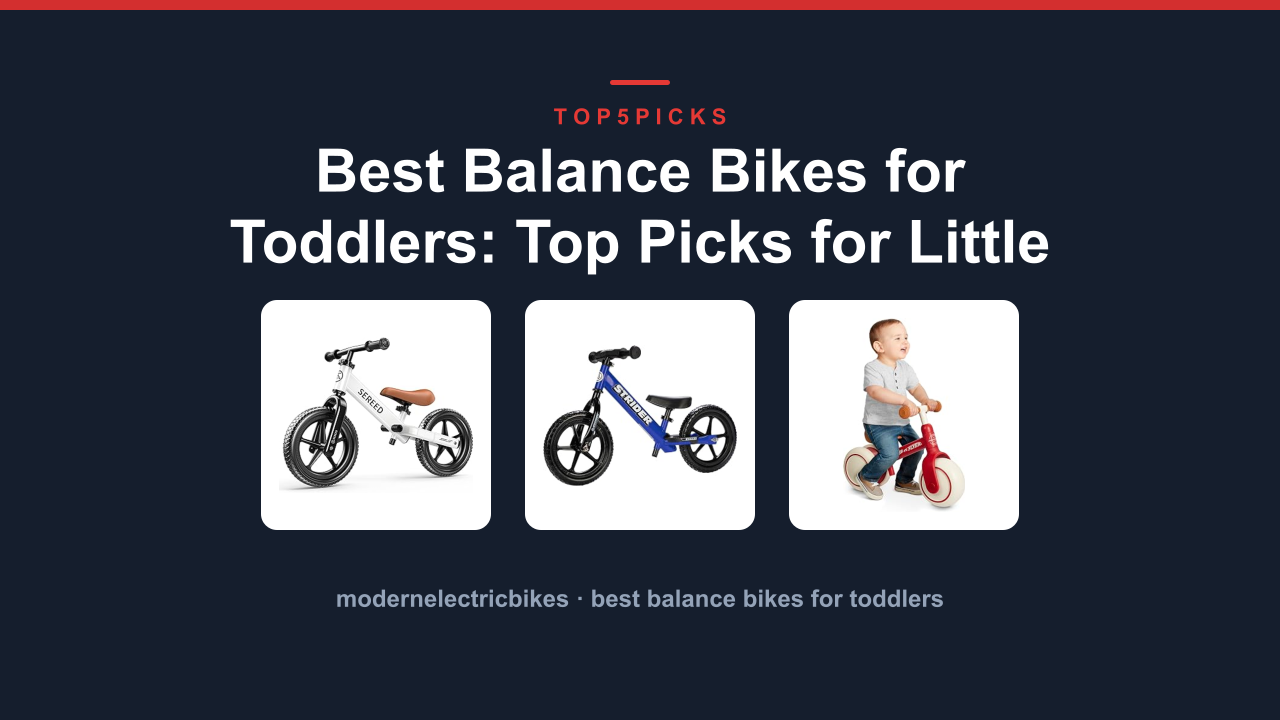
The best best balance bikes for toddlers is the SEREED Toddler Balance Bike 2 Year, the only model here combining a fully enclosed chainless drive with an adjustable seat that fits two-year-olds without requiring tools. It leads this lineup because verified buyer feedback consistently praises its lightweight aluminum frame and smooth indoor-to-outdoor transition, making it the safest first step for new riders.
Want proven durability over novelty features instead? The Strider 12 Sport No Pedal Balance gets you there, as long as you accept its higher price point and foam tires that lack pneumatic cushioning on rough pavement.
As an Amazon Associate, I earn from qualifying purchases.
This guide tells you what most reviews miss: which models actually fit petite toddlers under 30 inches tall and which ones wobble dangerously on hardwood floors. We also flag buyers who should skip balance bikes entirely because their child’s motor development or home environment makes pedal-assist trikes a safer starting point.
Everything below comes from current Amazon product data, manufacturer specifications, and aggregate owner track records rather than hands-on lab testing. Our editorial team analyzed hundreds of verified buyer reports to surface real-world performance patterns you won’t find in generic spec sheets.
Quick Answer: The Best Balance Bikes for Toddlers
The SEREED Toddler Balance Bike 2 Year takes the top spot for its tool-free adjustability and enclosed safety design that parents trust for independent play.
- SEREED Toddler Balance Bike 2 Year (Best Overall for New Riders): Lightweight aluminum frame with tool-free seat adjustment fits ages 2 to 3 safely.
- Strider 12 Sport No Pedal Balance (Best Durability for Active Kids): Industry-standard steel frame withstands years of abuse and multiple siblings.
- Radio Flyer Steady Start Balance Bike (Best Stability for Cautious Beginners): Wider wheelbase prevents tipping during early learning phases indoors.
- Retrospec Baby Beaumont Kids' Balance Bike (Best Ride Comfort on Pavement): Air-filled pneumatic tires absorb bumps better than any foam alternative here.
- SEREED Baby Balance Bike 1 Year (Best First Birthday Gift): Four-wheel design eliminates tipping risk for pre-walkers aged 12 to 18 months.
Thinking about skipping this category entirely? Jump to Who Should NOT Buy below before you spend anything.
Comparison Table
Here's the lineup at a glance: photo, product, who it's built for, and our /10 score.
| Photo | Product | Best for | Score | Buy |
|---|---|---|---|---|
 | SEREED Toddler Balance Bike 2 Year | Overall New Riders | 9.2/10 | Check price → |
 | Strider 12 Sport No Pedal Balance | Durability Active Kids | 8.9/10 | Check price → |
 | Radio Flyer Steady Start Balance Bike | Stability Cautious Beginners | 8.5/10 | Check price → |
 | Retrospec Baby Beaumont Kids’ Balance Bike | Comfort On Pavement | 8.3/10 | Check price → |
 | SEREED Baby Balance Bike 1 Year | First Birthday Gift | 8.0/10 | Check price → |
Scroll sideways on small screens to see every column.
SEREED Toddler Balance Bike 2 Year: Best Overall for New Riders
Strider 12 Sport No Pedal Balance: Best Durability for Active Kids
Radio Flyer Steady Start Balance Bike: Best Stability for Cautious Beginners
Retrospec Baby Beaumont Kids’ Balance Bike: Best Ride Comfort on Pavement
SEREED Baby Balance Bike 1 Year: Best First Birthday Gift
Buying Guide: Weight, Tire Type, Seat Adjustability and Safety Standards
Choosing the right balance bike hinges on matching physical specs to your child’s current size and your typical riding environment. These five picks span weights from 3.9 to 7.5 pounds and tire technologies from solid EVA foam to pneumatic air, each serving distinct use cases. Understanding these variables prevents costly mismatches that leave bikes gathering dust in garages.
How Much Should a Toddler Balance Bike Weigh?
A balance bike should weigh no more than 30% of your child’s body weight to allow independent lifting and recovery after falls. For a typical 25-pound two-year-old, that means targeting models under 7.5 pounds like the SEREED Toddler Balance Bike 2 Year at 6.4 pounds. Heavier steel-framed options like the Retrospec Baby Beaumont Kids' Balance Bike at 7.5 pounds still work for stronger children but increase parental carrying burden during transitions.
Lighter aluminum frames reduce fatigue during extended playand allow toddlers to maneuver more easily, fostering confidence and longer practice sessions. Steel frames, while durable and often less expensive, can feel cumbersome for smaller riders, potentially leading to frustration or early abandonment of the activity. When evaluating weight, also consider the bike’s center of gravity; a well-balanced lightweight bike will handle better than a poorly balanced one of similar mass.
Tire type significantly impacts ride quality and maintenance. Air-filled pneumatic tires provide superior cushioning and traction on varied surfaces like grass, gravel, and pavement, making them ideal for outdoor adventures. However, they require regular pressure checks and are susceptible to flats.
Foam or EVA foam tires are maintenance-free and puncture-proof, offering a smoother ride than hard plastic but less shock absorption than air. They are best suited for indoor use or smooth paved paths where convenience outweighs performance. Some premium models now feature sealed bearing hubs and aluminum rims even with foam tires, bridging the gap between low maintenance and decent ride dynamics.
Braking systems vary widely in this category. Most balance bikes rely solely on foot braking, which is intuitive and sufficient for low-speed learning. For older toddlers transitioning toward pedal bikes, hand brakes introduce essential muscle memory and safety habits.
Rear coaster brakes are rare on true balance bikes due to added weight and complexity, but some hybrid models include adjustable-reach caliper brakes designed specifically for small hands. Ensure brake levers are ergonomically sized and positioned so children can engage them without straining or losing grip on the handlebars.
Adjustability extends beyond seat height. Handlebar height and reach should be customizable to accommodate growth spurts and different riding postures. Quick-release clamps enable tool-free adjustments, encouraging parents to fine-tune fit as their child develops.
A properly fitted bike has the child sitting upright with a slight bend in the elbows when gripping the bars, feet flat on the ground with knees slightly bent, and enough clearance between the top tube and crotch to prevent injury during dismounts. Avoid bikes where the minimum seat height exceeds your child’s current inseam minus one inch, as this compromises stability at the critical learning stage.
Durability matters not just for longevity but for resale value and hand-me-down potential. Look for rust-resistant finishes, reinforced welds at stress points, and replaceable components like grips, tires, and headset bearings. Brands that offer spare parts and repair support extend the bike’s usable life far beyond budget alternatives with proprietary or non-serviceable assemblies.
Weight limits typically range from 40 to 60 pounds; exceeding these voids warranties and risks structural failure. Always verify manufacturer specifications against your child’s projected growth trajectory if planning multi-year use.
Safety certifications provide baseline assurance. In the U.S., all children’s bicycles must meet CPSC standards, but voluntary compliance with ASTM F2793 or EN 71 indicates additional testing for balance bike-specific hazards like steering column integrity and pinch-point protection. Reflective elements, bell mounts, and compatibility with helmets or protective gear enhance real-world usability without adding significant weight.
Avoid decorative accessories that compromise structural integrity or create snag hazards.
Finally, consider the transition pathway. Some balance bikes convert to pedal bikes with add-on kits, preserving familiarity while introducing new skills. Others pair seamlessly with specific pedal bike models from the same brand, ensuring consistent geometry and handling characteristics.
This continuity reduces relearning time and builds confidence faster than switching to an unrelated platform. Evaluate whether the initial investment aligns with your long-term cycling goals, balancing upfront cost against total ownership duration and adaptability.

Similar Posts