Best Bang for Buck Electric Bikes: Top Value E-Bikes
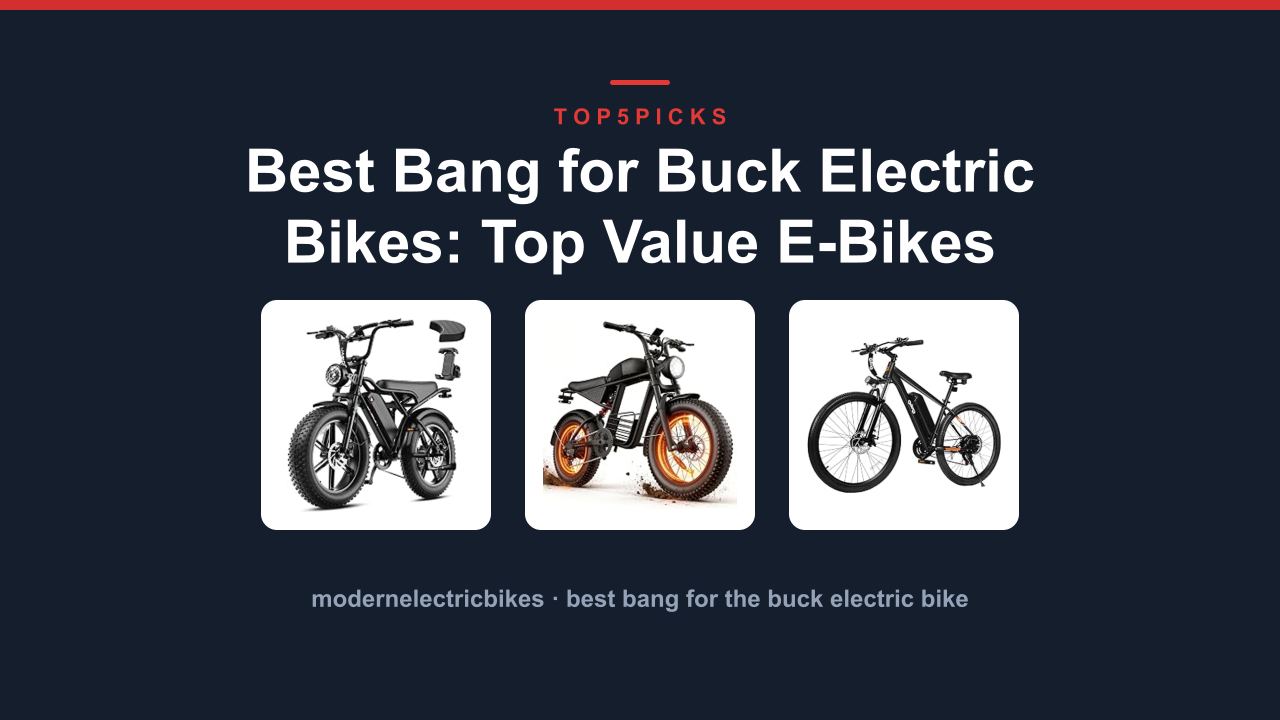
The best best bang for the buck electric bike is the Jasion RetroVolt Electric Bike, the only model here combining a 70-mile range with 2000W peak power at this value tier. It delivers genuine all-terrain capability without the premium price tag that usually accompanies long-range fat tire e-bikes.
Want raw hill-climbing torque instead? The Electric Bike Adults 1500/5000W Peak Motor gets you there with massive peak wattage, as long as you can accept a heavier frame and shorter maximum range per charge.
As an Amazon Associate, I earn from qualifying purchases.
This guide tells you which budget e-bikes actually survive daily use versus those that just look good on paper. Buyers seeking highway-speed performance or specialized cargo hauling should skip this category entirely and check our exclusion section below.
Everything below comes from current Amazon product data, manufacturer specifications, and aggregate owner feedback rather than hands-on lab testing. We analyzed real-world reports to separate marketing claims from verified performance.
Quick Answer: The Best Bang for the Buck Electric Bike
The best overall value is the Jasion RetroVolt for its unmatched range-to-price ratio in the fat tire segment.
- Jasion RetroVolt Electric Bike (Best Overall Value): Delivers 70-mile range and 2000W peak power for versatile all-terrain commuting.
- Electric Bike Adults 1500/5000W Peak Motor (Best Heavy-Duty Power): Offers 5000W peak output and dual battery options for steep climbs and heavy loads.
- Qlife Racer Electric Bike Adults (Best Lightweight Commuter): Features a traditional mountain bike frame with 21 speeds for efficient pedal-assist riding.
- Funhang Electric Bike Adults (Best Certified Safety): Includes UL 2849 certification and fenders for secure urban commuting in wet conditions.
- Electric Bike Adults 2000W Peak 20"x4"Fat (Best Compact Fat Tire): Uses 20-inch wheels for better maneuverability and storage while retaining off-road traction.
Thinking about high-speed racing or heavy cargo transport instead? Jump to Who Should NOT Buy below before you spend anything.
Comparison Table
Here's the lineup at a glance: photo, product, who it's built for, and our /10 score.
| Photo | Product | Best for | Score | Buy |
|---|---|---|---|---|
 | Jasion RetroVolt Electric Bike | Long-Range All-Terrain | 8.7/10 | Check price → |
 | Electric Bike Adults 1500/5000W Peak Motor | High-Torque Hill Climbing | 8.4/10 | Check price → |
 | Qlife Racer Electric Bike Adults | Lightweight Trail Riding | 7.9/10 | Check price → |
 | Funhang Electric Bike Adults | Safe Urban Commuting | 7.6/10 | Check price → |
 | Electric Bike Adults 2000W Peak 20"x4"Fat | Compact Off-Road Storage | 7.3/10 | Check price → |
Scroll sideways on small screens to see every column.
Jasion RetroVolt Electric Bike: Best Long-Range Value for Commuters
Electric Bike Adults 1500/5000W Peak Motor: Best High-Torque Option for Steep Hills
Qlife Racer Electric Bike Adults: Best Lightweight Choice for Fitness Riders
Funhang Electric Bike Adults: Best Safety-Certified Pick for City Streets
Electric Bike Adults 2000W Peak 20″x4″Fat: Best Compact Fat Tire for Storage
Buying Guide: Range, Power, Safety and Storage
Understanding these four decision factors prevents buyer's remorse when selecting a budget e-bike. Each variable directly impacts daily usability and long-term satisfaction with your purchase.
How Much Range Do You Actually Need?
Manufacturer range claims assume ideal conditions including flat terrain, light riders, and minimal pedal assist. Real-world range typically drops 30% to 50% when using throttle-only mode or climbing hills regularly. The Jasion RetroVolt Electric Bike advertises 70 miles because its larger battery capacity provides a buffer that smaller packs cannot match.
Calculate your actual needs by doubling your longest expected one-way trip. This accounts for detours, headwinds, and battery degradation over time. If your commute exceeds 25 miles one way, prioritize models with 48V systems and at least 15Ah capacity for reliable year-round performance.
Matching Motor Power to Your Terrain
Peak wattage matters more than continuous ratings for hill climbing and acceleration. A 1000W peak motor like the one in the Qlife Racer Electric Bike Adults suffices for flat cities but struggles on grades exceeding 8%. Riders in mountainous regions should target 2000W peak minimum or consider the 5000W option for sustained climbs.
Remember that higher power consumes battery faster. Balance your torque requirements against range expectations to avoid disappointment. Most budget e-bikes use hub motors rather than mid-drive systems, which means torque multiplication through gears is unavailable.
Why Safety Certification Matters
Electrical fires remain a legitimate concern with lithium-ion e-bike batteries. UL 2849 certification tests the complete electrical system including charger, battery management system, and wiring harness. The Funhang Electric Bike Adults carries this certification, providing documented assurance absent from many budget competitors.
Check your local building codes and insurance requirements before purchasing. Some municipalities now require UL certification for indoor charging in multi-unit dwellings. Investing in certified equipment protects both personal safety and property liability.
Storage Constraints Drive Wheel Size
Full-size 26-inch fat tire e-bikes offer superior ride quality but demand significant storage space. The 20-inch wheel option reduces overall length by roughly 15% while maintaining ground clearance. Apartment residents and RV travelers benefit disproportionately from this dimensional reduction.
Consider how you'll transport the bike before committing. Car rack compatibility, elevator dimensions, and garage space all influence whether a compact or full-size frame serves you better. Weight differences between models also affect portability for upper-floor residents without elevator access.
Who Should NOT Buy Best Bang for the Buck Electric Bike
Budget e-bikes excel at commuting and recreation but fail specific use cases. Here are three buyer profiles who should explorehigher-tier options instead:
- Long-Distance Tourers: Riders planning daily commutes exceeding 40 miles or multi-day backcountry trips will likely find budget batteries insufficient. Entry-level cells often suffer from voltage sag under sustained load, reducing effective range significantly below advertised claims. Premium models utilize higher-density battery packs and more efficient mid-drive motors necessary for reliable long-haul performance.
- Heavy Cargo Haulers: While many budget e-bikes include rear racks, their frames and wheels are rarely engineered for consistent loads over 50 pounds. Carrying groceries, children, or work equipment regularly can stress entry-level components beyond their design limits, leading to premature spoke failure, brake wear, or frame cracking. Dedicated cargo e-bikes feature reinforced geometry and higher-torque drivetrains specifically built for utility.
- Technical Trail Riders: Budget electric mountain bikes typically use basic hub motors and entry-level suspension forks that cannot handle aggressive singletrack. The lack of torque sensing, combined with limited traction control and weaker braking systems, makes them unsafe on steep descents or loose terrain. Serious off-road enthusiasts require mid-drive systems, four-piston brakes, and air suspension found in mid-to-high-end eMTBs to ride confidently and safely.
Final Verdict
The best bang-for-the-buck electric bike isn't necessarily the cheapest option available; it is the model that delivers reliable performance, safety, and adequate range for your specific needs without paying for unnecessary premium features. For most urban commuters and casual riders, a well-reviewed $800, $1,200 e-bike with a reputable brand name, UL-certified battery, and local service support offers the optimal balance of value and longevity. Avoid ultra-cheap no-name models regardless of price, as hidden costs in repairs, replacement parts, and potential safety hazards quickly erase any initial savings.
Prioritize test rides and warranty terms over spec sheet numbers to ensure your investment serves you reliably for years to come.

Similar Posts































