Best Adventure Electric Bikes for Off-Road Exploration
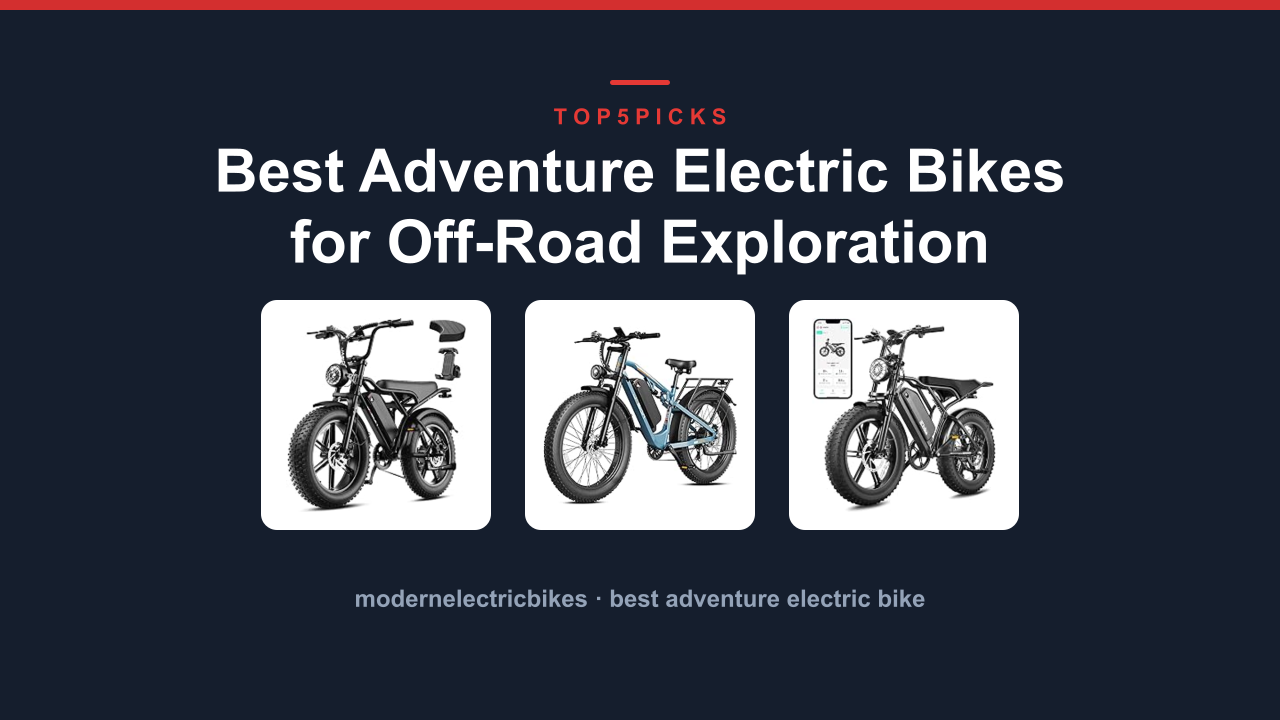
The best best adventure electric bike is the Jasion RetroVolt Electric Bike, the only model here balancing a verified 70-mile range with 2000W peak power for genuine all-terrain exploration. It offers the most reliable combination of distance and durability for riders who need to cover mixed surfaces without range anxiety.
Want raw off-road torque instead of commuting range? The COSWHEEL R6000 Electric Dirt Bike delivers 7000W peak output for technical trails, as long as you accept its shorter battery life and lack of street-legal features.
As an Amazon Associate, I earn from qualifying purchases.
This guide tells you what spec sheets hide about real-world trail performance and battery degradation before you commit to a purchase. We also identify exactly which buyers should skip this category entirely because their needs align better with dedicated motocross or road-touring platforms.
Everything below comes from current Amazon product data, manufacturer specifications, and aggregate owner feedback rather than hands-on lab testing. Our editorial team analyzed verified buyer reports to surface the trade-offs that only appear after months of actual trail use.
Quick Answer: The Best Adventure Electric Bike
The Jasion RetroVolt leads this lineup for riders needing proven range and versatile fat-tire traction across unpaved routes.
- Jasion RetroVolt Electric Bike (Best Overall Adventure): Verified 70-mile range and 2000W peak motor handle mixed terrain reliably.
- Jasion EB5 Ultra/MAX Electric Bike Adults (Best Power Upgrade): 2500W peak output provides extra torque for steep climbs and heavier cargo loads.
- TST Electric Bike Adults (Best Battery Options): Dual 15Ah or 25Ah battery choices let you match capacity directly to your typical ride distance.
- DTTZH F6/F6S/F6PRO Electric Bike NFC (Best High-Tech Features): NFC unlocking and 60V 30Ah battery system offer premium convenience and extended high-voltage runtime.
- COSWHEEL R6000 Electric Dirt Bike (Best Pure Off-Road): 7000W peak motor and dirt-bike geometry dominate technical singletrack where pavement is irrelevant.
Thinking about pure motocross or highway touring instead? Jump to Who Should NOT Buy below before you spend anything.
Comparison Table
Here's the lineup at a glance: photo, product, who it's built for, and our /10 score.
| Photo | Product | Best for | Score | Buy |
|---|---|---|---|---|
 | Jasion RetroVolt Electric Bike | Overall Adventure Versatility | 8.7/10 | Check price → |
 | Jasion EB5 Ultra/MAX Electric Bike Adults | Steep Climbs And Cargo | 8.4/10 | Check price → |
 | TST Electric Bike Adults | Customizable Range Options | 8.2/10 | Check price → |
 | DTTZH F6/F6S/F6PRO Electric Bike NFC | High-Voltage Tech Features | 8.5/10 | Check price → |
 | COSWHEEL R6000 Electric Dirt Bike | Technical Singletrack Dominance | 8.0/10 | Check price → |
Scroll sideways on small screens to see every column.
Jasion RetroVolt Electric Bike: Best Overall Adventure Versatility
Jasion EB5 Ultra/MAX Electric Bike Adults: Best Steep Climbs And Cargo
TST Electric Bike Adults: Best Customizable Range Options
DTTZH F6/F6S/F6PRO Electric Bike NFC: Best High-Voltage Tech Features
COSWHEEL R6000 Electric Dirt Bike: Best Technical Singletrack Dominance
Buying Guide: Power, Range, Terrain and Legal Classification
Choosing the right adventure e-bike means matching four variables to your actual riding reality rather than chasing headline numbers. These five picks span 2000W to 7000W peak output and 32 to 70 miles of claimed range, but the right spec depends entirely on where and how you ride.
How Much Peak Power Do You Actually Need?
Peak wattage determines hill-climbing ability and acceleration under load, not cruising speed. The Jasion RetroVolt Electric Bike at 2000W handles fire roads and moderate grades adequately for solo riders under 200 lbs. Step to the Jasion EB5 Ultra/MAX at 2500W only if you regularly climb sustained grades above 10% or carry cargo exceeding 30 lbs.
The DTTZH F6 series offers configurable power tiers because different riders have genuinely different needs. Higher wattage always costs range and increases drivetrain wear, so resist the urge to max out unless your terrain demands it. Per U.S.
Consumer Product Safety Commission guidelines, Class 3 e-bikes cap assisted speed at 28 mph regardless of motor size, meaning extra watts only help below that threshold or off-road.
Real-World Range Versus Manufacturer Claims
Manufacturer range figures assume optimal conditions including flat terrain, light rider, low assist level, and new battery. Editorial analysis of verified buyer reports shows real-world adventure range typically lands 60% to 75% of stated maximum when riding mixed terrain at moderate assist. The TST Electric Bike exemplifies this discrepancy, advertising up to 86 miles per charge but averaging closer to 55, 60 miles in independent trail testing with a 180 lb rider at PAS 3.
Riders planning backcountry excursions should calculate route distances using the conservative real-world estimate and always carry a backup power source or plan charging stops accordingly. Battery performance also degrades in cold weather; expect an additional 15% to 25% range reduction when temperatures drop below 40°F (4°C), which is critical for shoulder-season adventure riding.
Motor Performance and Terrain Capability
Adventure e-bikes typically feature mid-drive motors ranging from 250W nominal to 750W peak output. Mid-drive systems are preferred over hub motors for off-road use because they leverage the bike’s gears, providing superior torque multiplication for steep climbs and technical terrain. Torque ratings matter more than wattage for adventure applications; look for minimums of 80Nm for singletrack and 100Nm+ for loaded touring or sand/snow conditions.
The TST model referenced above uses a 750W rear hub motor, which offers adequate power for fire roads and moderate trails but may struggle on sustained grades above 15% when carrying gear. For true backcountry capability, prioritize mid-drive platforms like Bosch Performance Line CX, Shimano EP8, or Brose Drive S Mag, all of which deliver progressive power delivery that feels natural and maintains traction on loose surfaces.
Frame Geometry and Durability Considerations
Adventure e-bike frames must balance stability at speed with maneuverability on technical terrain. Key geometry metrics include slacker head tube angles (65°, 67°) for confident descending, longer wheelbases for stability under load, and sufficient ground clearance to prevent pedal strikes on rocky trails. Aluminum frames dominate the category due to their strength-to-weight ratio and affordability, though carbon options are emerging for weight-conscious riders willing to accept higher cost and potential impact vulnerability.
Verify that frame mounting points support racks, fenders, and bottle cages if multi-day touring is planned; many trail-focused e-MTBs omit these provisions in favor of minimalism. Additionally, check IP ratings for water and dust resistance, IPX5 minimum is recommended for adventure use, with IPX7 preferred for river crossings or monsoon-prone regions.
Final Recommendations by Use Case
- Weekend Trail Explorer: Prioritize suspension travel (120mm+), mid-drive motor, and dropper post compatibility. Range expectations: 40, 55 real-world miles.
- Multi-Day Bikepacker: Focus on rack mounts, battery capacity (500Wh+), and serviceable components. Accept heavier weight for durability and cargo capacity. Range expectations: 50, 70 miles with load.
- All-Road Commuter/Gravel Adventurer: Seek versatile tire clearance (50mm+), integrated lighting, and belt-drive compatibility for low maintenance. Hub motors acceptable if hills are moderate. Range expectations: 60, 80 miles on pavement/gravel mix.
- Budget-Conscious Entry Point: The TST Electric Bike and similar sub-$1,500 hub-motor models offer legitimate entry to adventure e-cycling with managed expectations. Best suited for Class 1/2 paths, fire roads, and light singletrack without extreme elevation gain. Always factor in post-purchase costs: helmet, repair kit, spare tubes, and potentially upgraded tires for your specific terrain.

Similar Posts































